Get AI Briefings, Transcripts & Alerts on Local & National Government Meetings — Forever.
San Antonio airport outlines $648M capital plan, new terminal and route expansion in FY2026 budget presentation
Summary
San Antonio’s airport director presented the aviation department’s proposed 2026 budget and a multi‑year capital program that includes a new terminal, runway/stormwater improvements and efforts to add international nonstop service. Councilmembers asked about fees, grants and accessibility; no council action was taken at the meeting.
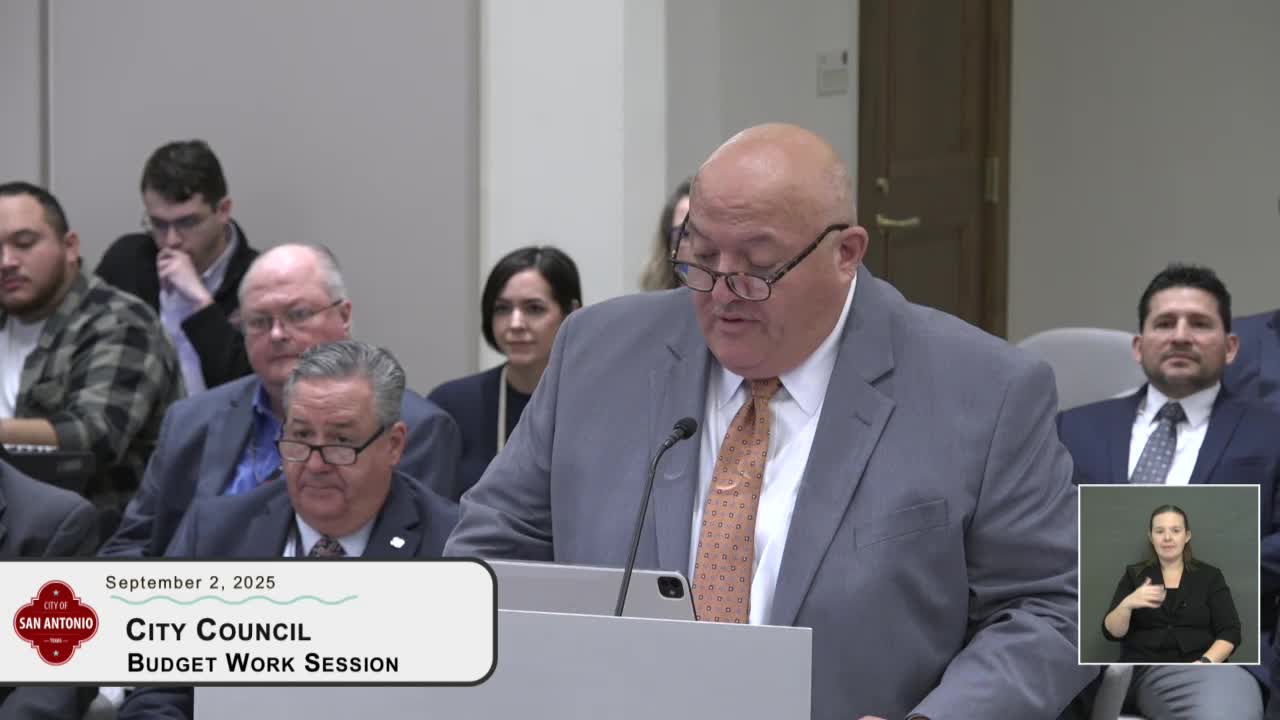
San Antonio’s airport director presented the aviation department’s proposed fiscal 2026 budget and a multi‑year capital program at the Sept. 2 City Council meeting, saying the airport is on track to open a new terminal and expand routes including international service.
The presentation, delivered by Jesús (Director of Airports), focused on projected passenger growth, a $648 million capital program for airfield and terminal improvements and funding from passenger and federal grant programs. Jesús said the airport expects to continue growing toward 11.3 million passengers in 2026 and highlighted work to reach 90% design on the new terminal later this year.
Why it matters: The airport’s capital work and service development influence local jobs, tourism and transportation costs. Council members pressed staff on passenger facility charges, nonairline revenues such as parking and concessions, and operational readiness for expanded international service.
Jesús described the capital program as including runway stabilization and drainage, repairs and rehabilitation at Stinson Municipal Airport, upgrades to Terminal A/B circulation and a new security/public‑safety facility. He told the council the terminal program is “inside budget and on the design schedule,” and that the project team expects to reach a guaranteed maximum price after the design reaches 90 percent.
The presentation listed multiple funding sources. Jesús credited airport staff and outside partners for winning discretionary grants and said the airport has secured “more than $272,000,000 in grants” since 2020 (figure presented by staff). He also said user charges and federal subsidies support operations, while PFCs and a customer/contractor facility charge (CFC) remain flat in the forecast.
Councilmembers asked how a proposed inspection/fee change would affect ticket prices. Jesús said the inspection fee is charged statewide on tickets and that San Antonio’s level compares favorably to peer cities; the council noted Houston’s higher fee. Members also asked about nonairline revenue projections — parking, concessions and ground‑transport fees — and Jesús said concession growth and a parking modernization program are expected to raise nonairline revenue.
Accessibility and customer service were recurring topics. Jesús described an ongoing accessibility program that includes sensory rooms, on‑call assistance for passengers with disabilities and monthly outreach with community representatives during terminal design. On security and safety, he said the airport follows FAA standards and has implemented technology and training programs that, in his view, place SAT among the country’s top medium‑sized airports.
Councilmembers thanked staff for outreach and asked for additional reporting: more detailed breakdowns of grant awards, a list of airport capital contracts and monthly updates on procurement/ACDBE (airport concession disadvantaged business enterprise) participation. Jesús offered to supply contract and outreach reports on request and to arrange a site tour of construction work for council members.
No vote or formal council action on the airport budget occurred at the Sept. 2 meeting. The presentation will inform the council’s budget deliberations and later appropriation items.