Get Full Government Meeting Transcripts, Videos, & Alerts Forever!
Get email alerts on the Convention Centers topic
No spam. Unsubscribe anytime.
San Antonio officials pitch $91.9 million 2026 budget for convention centers; $23.3 million in capital work proposed
Summary
City budget staff on Tuesday outlined a proposed $91.9 million fiscal 2026 spending plan for San Antonio’s convention and event facilities and said the city is proposing $23.3 million in capital improvements at the Henry B. González Convention Center and the Alamodome.
City budget staff on Tuesday outlined a proposed $91.9 million fiscal 2026 spending plan for San Antonio’s convention and event facilities and said the city is proposing $23.3 million in capital improvements at the Henry B. González Convention Center and the Alamodome.
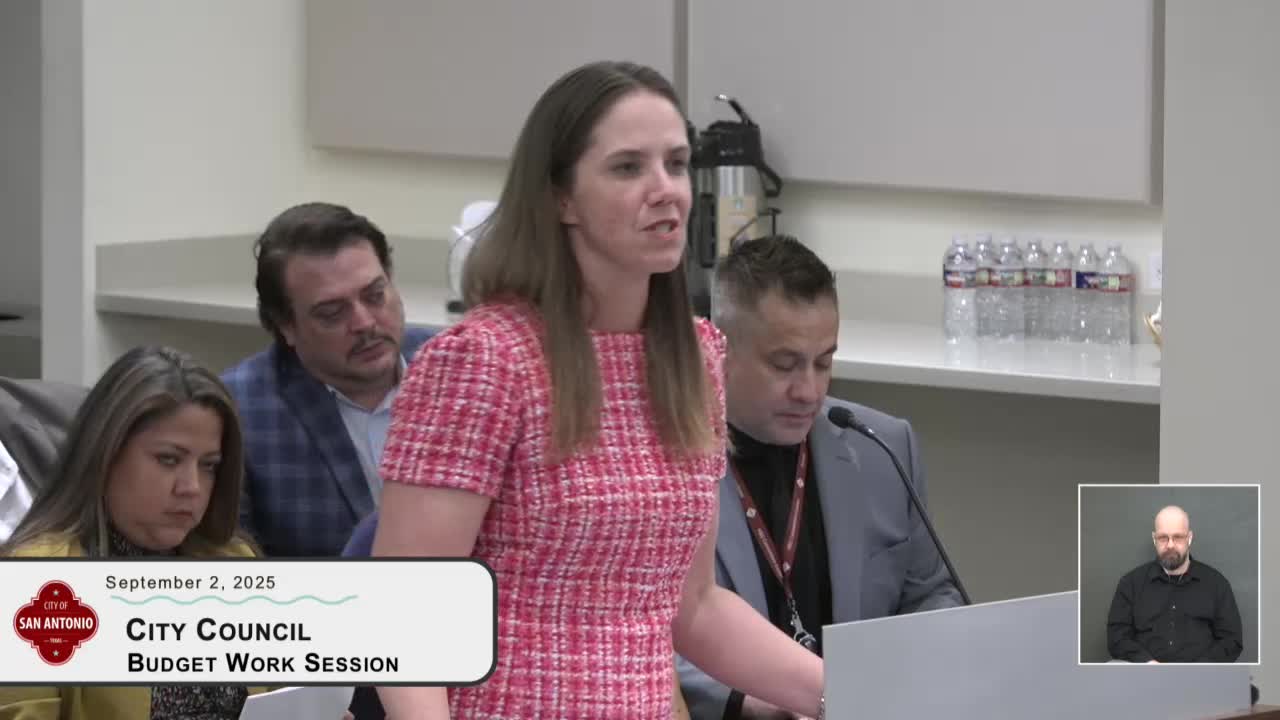
The presentations, given at a Sept. 2 budget workshop, said the city funds for those facilities are supported largely by the city’s hotel occupancy tax (HOT). Justina Tate, director of Budgets for the City of San Antonio, reported the city’s current combined HOT rate is 16.75 percent and said the city projects a 4 percent increase in collections for 2025 compared with 2024 and a further 2.6 percent increase in 2026 tied to growth in short-term rentals and stronger collection by platforms.
City staff told the council the proposed 2026 package would devote roughly $59.2 million to operations for the convention center and Alamodome. The proposed budget also includes $2.9 million for Visit San Antonio incentives, $1.4 million from the general fund for the Carver cultural center, $4.4 million for the state reimbursement program (a program that returns certain eligible municipal investments), and $23.3 million for capital projects at both facilities. Staff said the department would keep current staffing levels: 268 positions at the convention center, 70 at the Alamodome and 14 at the Carver (352 total).
Patricia Muñoz Cator, who presented the facilities’ plans and capital list, described planned 2026 projects at the convention center including $8.3 million to replace escalators and elevators; $3.9 million to renew the HVAC system; upgrades to fire panels and theater improvements; and other exhibit-hall repairs, restrooms and carpeting. At the Alamodome, staff proposed $3.3 million in capital work including storage-area upgrades, concessions and arena-area replacements plus roughly $1.5 million for HVAC and sound-system components.
Staff also proposed several revenue and fee changes tied to industry norms. The packet shows a modest increase to convention center rental rates estimated to yield about $39,000 and a proposed increase in per-ticket access fees for some ticketed events from current fees (cited in the presentation as $1–$2) to a $3–$5 range; staff said the change would align the city with prevailing industry practice and increase room-night demand.
Councilmembers asked detailed questions about the urgency, timing and prioritization of the capital projects and about how the city’s proposed investments compare with those of competing Texas markets. Several members pressed staff for written follow-up showing which projects are essential now, which could be deferred, and the financial consequences of delaying work. Councilmember Villagrán asked: “If we wait too long to invest, will we lose event cycles that are booked years in advance?” Patricia Muñoz Cator told the council that new, larger facilities in other Texas cities are expected between 2028 and 2030 and that convention planners book events three to five years ahead, creating urgency to move now.
Councilmembers also questioned assumptions behind revenue projections. Mayor (Alcaldesa) asked for more evidence demonstrating that capital investments will make San Antonio more competitive given larger investments by Dallas, Austin and Houston. City budget staff agreed to provide additional analysis and written responses on project urgency and the share of HOT revenues attributable to conventions.
Visit San Antonio representatives told the council their economic-impact research shows tourism and conventions are recovering to pre-pandemic levels. The Visit San Antonio presentation cited a record economic impact figure for 2023 and said the organization is working with local universities on annual impact studies; staff said the full impact report for 2023–2024 data will be available in November.
Councilmembers also raised operational concerns tied to major upcoming events — including traffic, construction impacts on small businesses and access for people with mobility needs — and asked staff to coordinate mitigation plans with event organizers and Visit San Antonio for large conventions and concerts. Staff said tailored transportation and event-management plans are created for large events and that some upfront event costs are advanced and later reimbursed through event re‑imbursement programs.
The council did not take formal votes on the items during the workshop. Staff committed to provide additional detail, including written prioritization of the $23.3 million in capital projects, the split of HOT revenues related to conventions, and comparisons with peer cities’ investments.
Ending: The council scheduled follow-up materials and analysis for a future meeting so members can weigh the capital priorities alongside other budget demands.