Get Full Government Meeting Transcripts, Videos, & Alerts Forever!
Get email alerts on the Municipal Budget topic
No spam. Unsubscribe anytime.
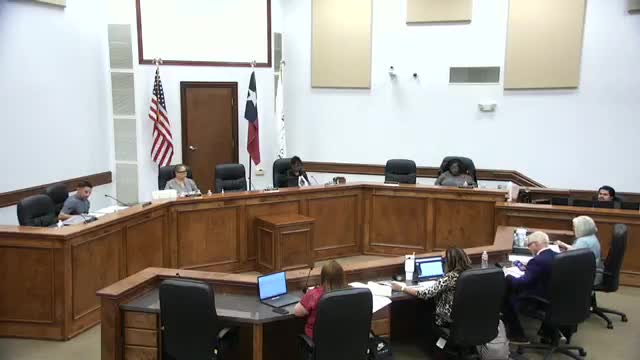
Balch Springs holds workshop on proposed 2025–26 budget; council sets Sept. 8 public hearings
Summary
City staff presented a draft 2025–26 budget and capital plan, flagged a $2.6 million gap between proposed spending and projected revenue, outlined planned staffing requests and OpenGov conversion issues, and the council voted to set public hearings on the tax rate and budget for Sept. 8.
Balch Springs city staff presented the proposed 2025–26 municipal budget during a Sept. 2 workshop and special call meeting and told the council they must adopt a tax rate by Sept. 17 to meet statutory deadlines. The council set public hearings on both the proposed tax rate and the budget for Sept. 8 and voted unanimously to schedule the hearings.
City staff said the draft budget currently shows about $2,600,000 in expenditures above projected revenues and that personnel costs continue to drive the largest share of spending. “We must have our tax rate adopted by September, seventeenth,” said Miss Tan, the staff budget presenter, urging council members to ask questions at Monday’s public hearing. City staff said they will submit an updated budget book before that meeting and may continue making cuts to close the gap.
The workshop focused on revenue and expense drivers. Staff noted property tax revenue is the largest single source (about 52% of projected revenue), followed by sales tax (about 23%), with smaller shares from transfers, contributed capital and other sources. Staff said they reduced the sales-tax projection for 2026 to be conservative after seeing lower collections year-to-date and added an estimated $600,000 in potential revenue from planned vehicle and equipment sales. Officials also said interest earnings will be higher in 2026 because of a recent debt issuance.
On expenditures, staff said personnel now comprises roughly 77% of the general fund budget and highlighted increases in health insurance, workers’ compensation and TMRS (the Texas Municipal Retirement System) costs. The presentation listed department-level increases — for example, increases in the fire salary line and code enforcement — and called out higher overtime and certification-rate calculations tied to the Fair Labor Standards Act and TMRS reporting. Staff also said several proposed new positions are included in the draft (examples listed in the packet include code enforcement officer, inspector, project coordinator, mechanic, records coordinator and an assistant city manager), but noted many of those positions would likely be cut unless funding is found; positions related to water and sewer work were described as more likely to proceed.
Staff described conversion issues with OpenGov, the city’s new cloud budgeting and financial transparency platform. Officials said parts of the OpenGov configuration were not completed by the previous finance director, requiring manual fixes; staff estimated OpenGov is about 75% configured for public use and said the city will not publish the live budget view until the data and departmental pages are consistent.
Utility funds were discussed separately. Staff said the adopted multi-year utility rate increase will take effect and that the water and sewer master plan remains incomplete; staff said completing the master plan will change capital projections and could increase the scale of required projects. Staff said the water, wastewater, solid waste and drainage funds are currently projected at roughly 41%, 31%, 26% and 2%, respectively, of utility fund activity.
Councilors discussed purchasing and procurement thresholds after staff summarized a state law change, described in the presentation as a recently effective Senate bill that raised the sealed-bid threshold from $50,000 to $100,000. Rebecca, a finance staff member, said the city’s current internal thresholds are lower than many peer cities and proposed raising some approval limits: for example, department-level approval up to $5,000, written quotes starting at $5,000, and sealed bids at $100,000 as in the state law. Council members debated lower levels for required purchase orders (POs) and suggested compromise thresholds: several council members said a $2,500 PO threshold would reduce “work stoppage” on routine maintenance purchases, and some recommended setting the sealed-bid trigger near $70,000–$75,000 rather than $100,000. Staff told council that any change to purchasing policy would return as ordinance language with procedural checks and reporting.
Two formal motions ended the meeting: council voted unanimously to set a Sept. 8 public hearing to take a record vote on the proposed 2025 tax rate; and the council voted unanimously to schedule a Sept. 8 public hearing on the proposed 2025–26 municipal budget. Voting recorded for both motions: Council member Hill — yes; Mayor Pro Tem Garcia — yes; Council member Patino — yes; Council member Miles — yes. Movers and seconders were not specified for the tax-rate hearing motion in the transcript; the motion to schedule the budget hearing was made by Council member Miles and seconded by Council member Hill. Staff said if the council cannot adopt the tax rate and budget on Sept. 8, the city will need a special meeting the following Monday to meet the Sept. 17 tax-rate adoption deadline.
Next steps: staff will continue reviewing and cutting proposed capital outlay and operating items this week, provide an updated budget book to the council before the Sept. 8 hearings, and present ordinance language for any changes to purchasing limits and the budget adoption packet. Council members signaled an appetite to reduce the $2.6 million gap through capital reductions and other cuts rather than proposing a tax increase at this time.
The workshop lasted about 100 minutes and moved into two recorded votes at the end of the session. The budget and tax-rate public hearings are scheduled for Sept. 8; adoption must occur by Sept. 17 to meet statutory deadlines.