Get Full Government Meeting Transcripts, Videos, & Alerts Forever!
Get email alerts on the Transportation topic
No spam. Unsubscribe anytime.
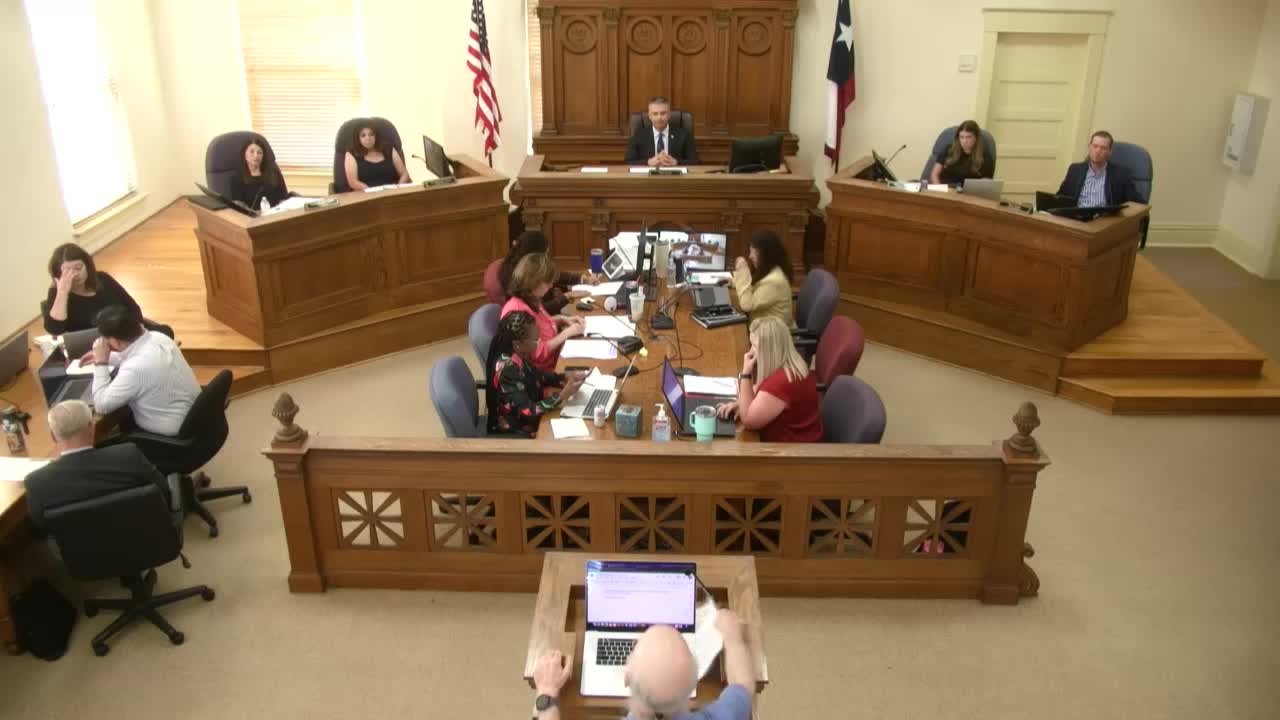
Hays County task force recommends prioritizing eastern road repairs; residents push back on Southwest connection
Summary
A county transportation task force presented a prioritized list of road projects that emphasizes immediate repairs in the rapidly growing eastern precincts. The recommendation drew extensive public comment—particularly opposition to the proposed Dripping Springs Southwest connection—and debate among commissioners over outreach and next steps.
A Hays County task force called for the county to prioritize repairs and upgrades to roads on the eastern side of the county, while deferring or delaying several proposed new alignments in the western, hill-country portion.
Task force members presented a three-tier “do it / defer / delay” list during the commissioners court meeting, saying roughly 75% of previously proposed projects are on the “do it” list for immediate work. The “defer” group included projects such as segments of the Yarrington Road extension; the “delay” group included the Dripping Springs Southwest connection through the Onion Creek corridor.
The recommendation follows community outreach assembled by Judge Becerra’s transportation task force, which the judge described as an attempt to “reset” project sequencing after litigation paused the earlier road bond implementation. “It’s not a don’t-do it list,” the judge said during the meeting; “it’s about choosing a prioritization sequence.”
Nut graf: The task force’s report aims to move limited county funds toward roads with the greatest immediate need—primarily in fast-growing eastern precincts—while postponing several controversial western projects that residents and environmental advocates say would open sensitive aquifer recharge lands to development.
Public comment at the meeting and via written submissions was extensive and largely opposed to the Southwest connection and other projects that would cross creeks and recharge zones. Speakers argued the proposed routes threaten water quality and quantity in the Edwards Aquifer and local springs.
“Bringing roads and intensive development to their recharge areas will severely limit water infiltration, lower water quality, and threaten the water supply,” wrote a group of Dripping Springs residents who submitted comments included in the record. Multiple written comments cited that “less than 4%” of public meeting attendees supported the Southwest connection at a Dripping Springs open house, and urged commissioners to follow the task force’s recommendation to prioritize eastern roads.
Task force member David Patterson summarized the work publicly: the group produced a “do it” list of about 18 immediate projects (including County Road 127 and FM 150 East), a shorter “defer” list for more discretionary items, and three projects to “delay” pending more study and community engagement—most prominently the Dripping Springs Southwest connection.
Commission discussion focused on outreach and legitimacy of the task force. Commissioner Smith and others pointed to extensive prior public engagement—23 public meetings and more than 120 stakeholder gatherings—and said many of the projects already trace to master transportation plans and prior studies. Some commissioners said the task force is intended to sequence, not cancel, the voter-approved slate of projects.
“Voters didn’t approve ‘don’t do it,’” Commissioner Inglesby said. “This recommendation isn’t about killing anything. It’s about choosing a sequence.”
Other commissioners and speakers said the court should improve transparency and use online outreach to reach a broader cross-section of residents. Task force presenters and several commissioners said they would circulate sign-in totals and meeting photos to document participation and the substance of feedback.
Ending: The court accepted the task force report into the record and commissioners signaled they would use it to guide prioritization as the court refines funding and scheduling decisions for road work. Additional public meetings and design-phase outreach were scheduled by staff; final project-by-project decisions will come later as specific funding allocations, engineering studies, and environmental reviews proceed.