Get Full Government Meeting Transcripts, Videos, & Alerts Forever!
Get email alerts on the Ui Modernization topic
No spam. Unsubscribe anytime.
DLIR says Hui Huakahi unemployment modernization is on schedule for March 2027 go‑live
Summary
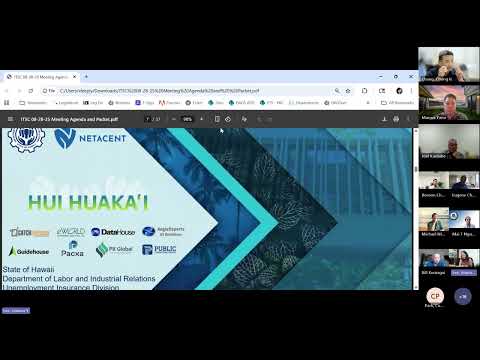
The Department of Labor and Industrial Relations (DLIR) told the Information Technology Steering Committee on Aug. 28 that its Hawaii Unemployment Insurance Modernization Initiative, Hui Huakahi, is on schedule for a March 2027 go‑live.
The Department of Labor and Industrial Relations (DLIR) told the Information Technology Steering Committee on Aug. 28 that its Hawaii Unemployment Insurance Modernization Initiative, Hui Huakahi, is on schedule for a March 2027 go‑live.
DLIR UI Administrator Ann Pereira Eustaquio and project manager Liz Thomas briefed the committee on the multiyear effort, which began in March 2024 and is designed to replace legacy unemployment insurance software with a modern claimant and employer portal, tax and appeals modules, fraud detection and improved data and reporting.
Hui Huakahi is a 36‑month implementation. Thomas said the project team is “49% complete” and identified the overall project status as green and low risk. The project has an independent verification and validation (IV&V) vendor, PCG, which the presenters said is also reporting the project as green and on schedule.
Project priorities presented to the committee include enhancing security and early detection of fraud, improving claimant and employer customer experience through journey mapping and improved user interfaces, building the system to adapt more quickly to changing economic conditions and providing leadership with near‑real‑time insights for decision making. The presenters said data conversion, development, testing, user acceptance testing and final training are sequenced to ensure organizational readiness before launch.
The DLIR team described an active organizational change management program. Thomas said average attendance at engagement sessions is about 64% and that the team conducts monthly “bring your own Bento” demonstrations with surveys; she reported a communication effectiveness score of 4.24, a resistance‑management perception score of 4.5 and an average morale score of about 3.9 on the survey instrument the project uses.
Agency leaders told the committee they worked with focus groups of claimants, employers and community organizations to refine enhanced wireframes and plain‑language documents; the presenters said the claimant portal will be available in multiple languages. The modernization package includes: an internal application for staff, a claimant portal, an employer portal, modernization of appeals and employer tax processes, and integrated fraud services.
On risks and governance, the team said they maintain an active risk matrix and mitigation plans; resource management and project documentation were described as moderate risks by design to sustain visibility and oversight. DLIR staff said they have managed earlier IV&V yellow flags through mitigation with the vendor and now report full green status.
Committee members asked about the project’s morale and measurement approach; Thomas said the project uses regular engagement surveys tied to monthly sessions to measure morale and to trigger targeted OCM activities when needed. Members also asked about vendors and scope; DLIR said the chosen vendor has been cooperative in scope management and that the project team uses lessons from other states’ UI modernizations.
DLIR did not bring a formal action or vote to the steering committee during the presentation. The agency said the team will continue to brief the committee as the project proceeds toward data conversion, user acceptance testing and training phases.
The committee followed the presentation with questions from members and state legislators and then moved on to other agenda items.