Get Full Government Meeting Transcripts, Videos, & Alerts Forever!
Get email alerts on the Sewer Infiltration topic
No spam. Unsubscribe anytime.
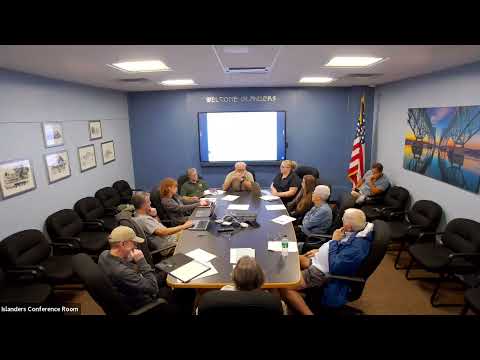
Grand Island officials describe sewer infiltration, pump upgrades and development moratorium in meeting
Summary
Board members discussed infiltration into the sanitary system that increases treatment plant volumes during rain events, recent funding for pump-station work, and a reported moratorium on development tied to unresolved drainage issues.
Board members told the Conservation Advisory Board that heavy rains rapidly increase flow into the town wastewater treatment plant and that the plant and associated pump stations have been overwhelmed on heavy rain days.
A board member summarized the operational problem: when the plant reaches capacity two wet wells fill and flows bypass to the river. He described much of the inflow as rainwater from sump pumps and infiltration through manholes rather than direct sanitary sewage. "It's not like right out of your shitter kind of water. It is a lot of rainwater... because we have people that have their sump pumps hooked up to their sewer system," the speaker said.
Funding and upgrades: the board discussed pump-station projects identified by station numbers (referred to as stations 8, 11 and 5) and mentioned roughly $7,000,000 for pump-station work. The town member said developers contributed to at least one project (Southpointe contributed funds for one station), and the town is seeking funds for upgrades.
Moratorium on development: board members said a moratorium on new development is in place until the stormwater and infiltration problem is addressed. The moratorium was cited as linked to infiltration concerns and the town's efforts to avoid state fines by demonstrating progress on corrective measures.
Options discussed: members suggested inspection and enforcement measures (for example, checking whether homeowners have sump pumps discharging to sanitary sewers) and engineering solutions such as bubblers, revised sump configurations, and additional pump-station capacity. One speaker proposed examining fines paid in recent years as a potential funding source for future improvements.
Ending: board members asked staff to continue tracking pump-station projects, provide details on the $7 million funding and prepare updates on the moratorium and any anticipated timelines for construction.