
Brownsburg approves 10-year personal property abatement for HarperCollins’ Project Tahoe after public hearing
Get AI-powered insights, summaries, and transcripts
Sign Up Free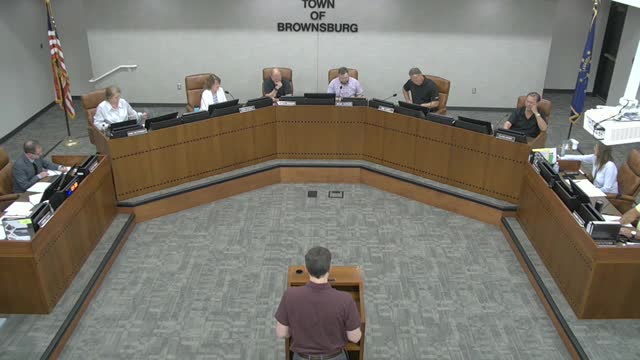
Summary
The Brownsburg Town Council approved a 10‑year personal property tax abatement for HarperCollins’ Project Tahoe after a public hearing in which members of the public raised questions about transparency and state incentives.
The Brownsburg Town Council approved a 10‑year personal property tax abatement for HarperCollins’ Project Tahoe, a planned supply‑chain logistics facility the town’s economic development staff said will support the publisher’s global printing and distribution operations.
Ethan Pierce, the town’s economic development staffer, told the council the company anticipates making “around a $155,000,000” personal property investment and creating about 400 jobs over a four‑year buildout. Staff recommended approval of a 10‑year personal property tax abatement and the council voted to adopt the confirmatory resolution after a public hearing.
Several residents raised transparency and incentive‑package concerns during the hearing. Rob Bridal of 624 South Grant Street questioned why the company’s identity had not been public earlier and criticized the role of the Indiana Economic Development Corporation (IEDC) in offering incentives. Bridal urged the council to disclose the full monetary value of state incentives and said local benefits depend on where new workers live. David Wyatt urged congratulations to staff for attracting the project but said the town’s role was limited to the personal property abatement being considered at the meeting.
Councilors closed the public hearing and, with no sustained objections from the council, voted to approve the confirmatory resolution (Resolution 2025‑14C). Town staff said further incentive details — including any state or third‑party incentives administered through the IEDC or other state programs — are outside the town’s authority, and that the town’s action was limited to the personal‑property abatement on the local tax bill.
The council vote authorizes the town’s confirmatory action in the tax‑abatement process; Pierce said the abatement is the second step in a multi‑stage approval. The project’s full financing package and any state incentives would be handled by other agencies, not the town.