
Local youth groups tell council ice arena access favors single organization
Get AI-powered insights, summaries, and transcripts
Sign Up Free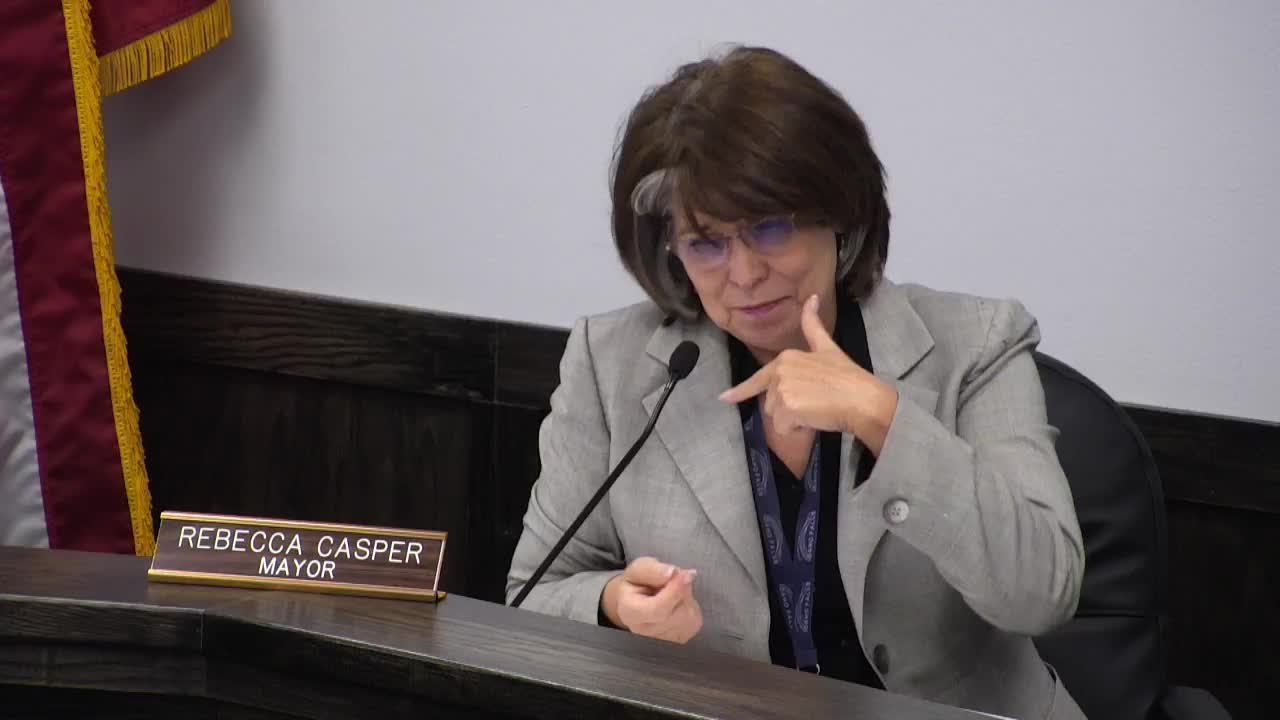
Summary
Representatives of two local youth skating groups told the Idaho Falls City Council that one club appears to receive the majority of after-school ice time, storage and facility access at the city ice arena and asked the city to make allocations more equitable.
Ben Roberts, president of the Sacred Youth Hockey Association, told the Idaho Falls City Council during public comment that his organization and other user groups believe the city is preferentially allocating ice arena resources to a single private organization, the Idaho Falls Youth Hockey Association. "Ninety percent of the available ice time has been allocated to IFYJ," Roberts said, adding that "of the 20 hours available of after-school ice time each week, IFYJ has 17 hours reserved." He described similar concerns about keys and 24/7 facility access, storage space provided at no cost to the favored group, and free use of city meeting rooms and audio-visual equipment for private meetings.
Stacy Martin, who said she lives in Shelley and serves on the boards of both hockey and figure-skating groups, urged the council to ensure "fair, transparent, and equal access" to the rink for all youth organizations. "Each child, no matter their sport or organization, deserves the same opportunity to thrive in a safe, supportive, and fair environment," Martin said.
Neither Roberts nor Martin asked the council to take a specific immediate vote; both framed their remarks as requests for the council and city staff to investigate allocation practices and consider changes. Mayoral comments at the meeting noted that Parks and Recreation staff were not present and that Public Works representatives were in the room; the mayor suggested representatives stay after the meeting so staff could collect contact information and follow up.
The speakers provided specific examples for council consideration: a near-total reservation of prime after-school ice times by a single club (17 of 20 weekly after-school hours), exclusive key access for that club, majority use of limited storage lockers without a contract or charge, and regular free use of city meeting space and equipment for private group meetings. Roberts said his group must rent private storage at an extra cost, which affects the group's ability to keep participation affordable.
No formal council action was taken at the meeting. Council members did not discuss or vote on policy changes during the public-comment period; city staff were invited to follow up with the groups after the meeting.