Get Full Government Meeting Transcripts, Videos, & Alerts Forever!
Get email alerts on the Public Safety Infrastructure topic
No spam. Unsubscribe anytime.
Commission approves design contract for new Fire Station 113 and Fire Administration building
Summary
The commission authorized Curry Sowers Aguila Architects Inc. to design a permanent Fire Station 113 and a new Fire Administration building. Staff expects an 18‑month design schedule and intends to pursue LEED Silver or equivalent sustainability standards.
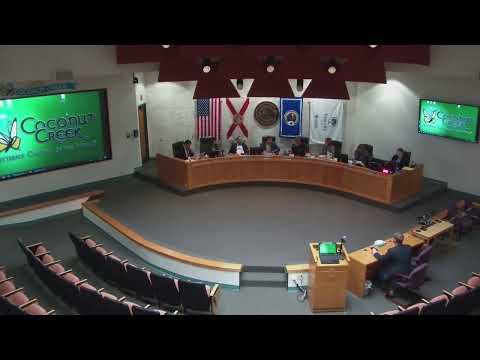
The Coconut Creek City Commission on Aug. 28 approved an agreement with Curry Sowers Aguila Architects Inc. (CSA) to provide design services for a permanent Fire Station 113 and a Fire Administration Building. City staff said the new facility will replace a modular station and consolidate fire administration now located in leased space.
City project manager Harry Naut told the commission the planned site is on a roughly 10‑acre city parcel adjacent to Monarch High School. Preliminary scope calls for a two‑story building of approximately 25,000 square feet with four apparatus bays, an administration component and a small data center. Staff said the contract includes post‑design services such as permitting assistance, submittal review and special inspections and estimated the design timeline at about 18 months.
Naut said the city solicited statements of qualification, issued 123 electronic invitations and received 12 responsive submittals. CSA was among five shortlisted firms and was selected for its fire‑station and LEED experience. CSA representatives on hand described prior fire station work and confirmed the team will begin schematic design immediately if authorized.
Commissioners discussed sustainability certification and cost considerations. Naut said the city intends to design to LEED Silver standards (or an equivalent program) but will weigh certification costs and may opt for a different recognized standard if certification costs prove excessive. Staff also described the city’s plan to use a construction manager‑at‑risk (CMAR) procurement, bringing a CMAR on around the 30% design stage to advise on constructability and prepare a guaranteed maximum price later in the design process.
Commissioners stressed active involvement by fire personnel during programming and design reviews; Naut said the fire chief and department staff will participate throughout design and in review committees.
Why it matters: The permanent station and consolidated administration will replace aging modular facilities and leased space, affect emergency operations, and require capital planning and construction funding. Design choices about sustainability, equipment, and training facilities (including an integrated training stair/tower) will affect long‑term operating and lifecycle costs.
What’s next: Staff will begin schematic design, issue an RFP for a construction manager‑at‑risk to join at roughly the 30% design stage, and return to the commission at key milestones (30% and 90% design) for review.