Get Full Government Meeting Transcripts, Videos, & Alerts Forever!
Get email alerts on the Budget topic
No spam. Unsubscribe anytime.
Commissioners debate countywide cost-of-living increase and 9-1-1 staffing amid budget review
Summary
Budget discussions focused on whether to provide a countywide cost-of-living adjustment, how to pay it, and staffing and overtime pressures at the county communications/9-1-1 center.
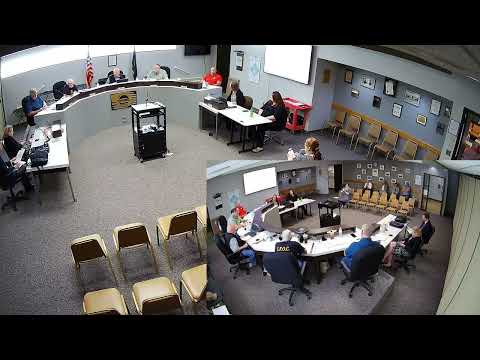
Commissioners spent the bulk of the Sept. 8 meeting reviewing the county budget, debating whether to grant a cost-of-living adjustment (COLA) to non-union county employees and examining staffing and overtime pressures at the county communications (9-1-1) center.
Lisa, the staff member presenting the budget worksheets, walked the board through current numbers, including a proposed ‘‘tax asking’’ figure and multiple funds that support the communications center. Assessor Robert’s valuation data underpins the county’s levy calculations, Lisa said.
Commissioners and staff discussed several interrelated topics: whether to fund a countywide COLA and how large it should be; how the county’s 9-1-1 funds (state PSAP/NextGen 9-1-1 receipts) are restricted and used; and operational strain at the comm center, where staff reported high overtime because training capacity limits the number of new hires that can be brought to full duty.
On the COLA, staff provided a worksheet showing estimated budget impacts by percentage: a 2% COLA was shown to require roughly $111,303 in additional budget authority; a 3% COLA was shown at approximately $166,607. Commissioners heard arguments both for and against adding a COLA now. Robert (the assessor) urged consideration of a COLA for non-union employees, saying many county staff would not otherwise receive increases. Some commissioners said the county can absorb a modest COLA by reallocating funds; others said they preferred to be cautious and not exceed statutory limits on property-tax increases without using reserves or taking exceptions.
The communications center presentation described multiple revenue sources and funds that cover different items: an advisory fund that pools support from cities and villages, a separate fund for state 9-1-1 receipts, and county contributions for Motorola maintenance and radio infrastructure. Lisa identified Scotts Bluff County’s portion of the comm-center budget line at roughly $123,542 for one pooled fund (figures from the packet). Staff also explained that some agency payments had been used to retire a Motorola lease and that interest on that lease created small timing discrepancies in the ledger.
Cindy (communications staff) described operational constraints causing significant overtime: the center is short-staffed for training capacity, with only a few certified trainers, which limits how many new hires can be brought online at once. Commissioners were briefed on the complexity of dispatcher training (medical protocols, scene safety, multi-tasking dispatch and telephone counseling) and on an in-person staffing alternative discussed to reduce overtime costs (hiring trained, out-of-area dispatchers to fill shifts while local hires complete training).
No final, binding vote on a countywide COLA occurred at the meeting. Several commissioners indicated informal support for a 2.5% COLA as a compromise; staff said they could rework the final budget numbers and return with a finalized package in advance of the joint public hearing set for Sept. 27. The board also instructed staff to prepare a final budget document for formal action at the public hearing or a scheduled follow-up meeting.