Get Full Government Meeting Transcripts, Videos, & Alerts Forever!
Get email alerts on the Transportation Microtransit topic
No spam. Unsubscribe anytime.
Fort Mill Economic Partners proposes $400K microtransit pilot to boost northern York County nightlife and tourism
Summary
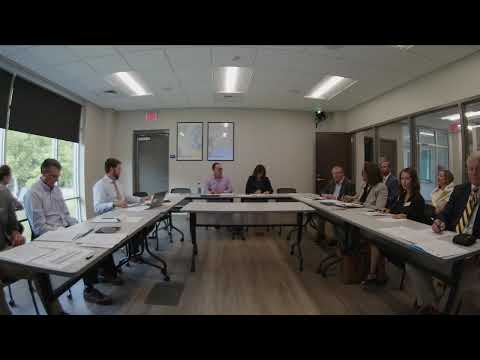
Fort Mill Economic Partners on Monday asked York County officials to consider helping fund a one‑year microtransit pilot intended to connect hotels, restaurants and entertainment districts north of the Catawba River.
Fort Mill Economic Partners on Monday asked York County officials to consider helping fund a one‑year microtransit pilot intended to connect hotels, restaurants and entertainment districts north of the Catawba River.
Mariah Price, executive director of Fort Mill Economic Partners, said the organization has been listening to local businesses and restaurants and that the pilot is intended “to evaluate the feasibility of utilizing microtransit as an economic development driver in the Northern York County area by implementing a pilot program between major lifestyle districts.”
The pilot as presented would operate year‑round, roughly 40 hours per week, with a 10–15 minute target wait time using three to four vehicles. Riders inside the service geofence would pay $2 per trip, the presenters said. The total one‑year cost for the scoped service area, including startup, marketing and vehicle charging infrastructure for electric vehicles, was presented as “just a little above $400,000.”
Proponents said the pilot is a data exercise: the provider’s platform would supply month‑by‑month reports on ridership growth, trips per vehicle, trip origins and destinations, and surveys about rider experience and price sensitivity. “We think it’s very important that we show that it actually works before you go head first into something like this,” Price told the committee.
David Hughes, who joined Price and other local partners in the presentation, said the platform includes a custom‑branded mobile app allowing businesses within the service area to appear as destinations and to promote offers to riders. He described the service as a “Yelp and Uber in your pocket at the same time,” and said the vendor supplies detailed operational and marketing data.
State Representative David Martin (District 26), attending the meeting, framed the proposal as a public‑safety and economic tool. “For me, being from Fort Mill…one person that goes to our businesses, enjoys himself, and safely gets home without dying on the roadway, that’s a success to me,” Martin said, noting South Carolina’s high roadway fatality rate and long Uber wait times in parts of Fort Mill.
Presenters cited regional examples — the Skipper and Bolt microtransit pilots — as evidence of growth potential. According to the presentation, one comparable service recorded a 91% increase in ridership from launch through June 2025 and carried roughly 4,000 trips per month in its initial service radius.
Funding and cost share
The presenters told the committee Fort Mill Economic Partners and the town of Fort Mill had committed private dollars, and that the business community had pledged a portion of the pilot budget. During the meeting they identified $67,000 in business commitments and a $40,000 commitment from Fort Mill Economic Partners; they said other business and hotel contributions were under discussion but “not specified” in the proposal documents.
Price said the group did not include a conservative revenue projection in the materials because it would be speculative; she said monthly reporting from the vendor would allow county and municipal partners to test revenue scenarios during the pilot year. The presenters described the pilot’s business model as intentionally subsidized early to build ridership and data that could support subsequent state or federal grant applications.
Operational details and equity
Presenters described a geofenced service area that could be adjusted but would prioritize compact, contiguous blocks that include the hotels and restaurant corridors. Vehicles would be operated and insured by the private vendor; the county would not own the vehicles or directly employ drivers during the pilot, according to the presenters.
Price said the contractor handles complaints, driver management and operational liability. The pilot would use all‑electric vehicles, which requires initial charging‑station buildout included in the presented budget.
Next steps and committee response
Committee members asked for more precise projections and a clearer funding breakdown. Some members voiced concern about using public funds for a service that primarily benefits nightlife and hotels; others said the proposal addresses a concrete barrier local businesses reported — patron access late at night when ride‑hail options are scarce.
A motion was made to refer the proposal to staff for review and a game plan; the presenter described this as a desired next step, but committee minutes record there was no second and the motion did not advance.
The presenters said they would return with additional detail and welcomed requests for follow‑up reporting. Price and her team offered to present again to the committee and provide written answers to specific budget and revenue questions.
Why this matters
Proponents argued the microtransit pilot could reduce short trips by private vehicle, help retain restaurants and hotels, and create a dataset to leverage state or federal grants. Opponents at the meeting urged measurable public benefits and clearer fiscal commitments before the county contributes taxpayer money.
Votes at a glance
- Motion to refer microtransit proposal to staff: no second; motion did not advance (no formal vote recorded).
Ending
Presenters left materials with committee staff and agreed to return with a more detailed funding breakdown, ridership projections and an implementation timeline suitable for committee review.