Get Full Government Meeting Transcripts, Videos, & Alerts Forever!
Get email alerts on the Short Term Rentals topic
No spam. Unsubscribe anytime.
Buena Vista tightens short‑term rental rules, approves temporary caps and ownership limits
Summary
The Board of Trustees approved Ordinance No. 9 (amendment C) on Aug. 26, capping out‑of‑county short‑term rental licenses and adding a two‑year ownership requirement and geographic limits; trustees said they will revisit the policy by Sept. 1, 2026.
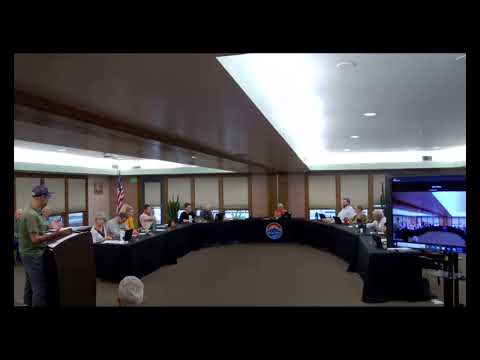
The Buena Vista Board of Trustees adopted Ordinance No. 9 with Amendment C on Aug. 26, placing a cap and new ownership and geographic limits on out‑of‑county short‑term rental (STR) licenses and setting a timetable to revisit the rules.
The ordinance package revised code language that governs short‑term rental license categories and proposed a set of implementation options discussed during an earlier July work session. Staff described existing categories and counts during a presentation: an existing cap on out‑of‑county licenses at 6 percent (119 licenses), an in‑county category (3 percent cap), primary‑residence licenses without a cap and special rules for certain multiunit buildings and South Main properties. Joel, the planning staff presenter, said staff redefined “total definable short‑term rental residential housing stock” to exclude deed‑restricted units and South Main residential units for the current calculation.
The adopted Amendment C combined three measures discussed by trustees: (1) preserve or convert to a numeric cap tied to the redefined housing stock, (2) prohibit issuance of new out‑of‑county STR licenses in R‑1 zoning (including R‑1 Old Town), and (3) require out‑of‑county applicants to have held the property in the same ownership for at least two years before qualifying for an STR license. Trustee Mika (who moved the ordinance) said the two‑year ownership rule addresses purchases made specifically to create STR businesses.
Trustees discussed whether to use a percentage or numeric cap and whether to add the six properties on the current waiting list to the cap. Trustee Rosenauer and others said they favored holding the numeric cap at the current level to avoid immediately issuing additional licenses to recent out‑of‑county purchasers. Trustee Swisher and others emphasized neighborhood stability, safety concerns and impacts on year‑round housing and workforce availability.
The board added a “whereas” clause stating the trustees intend to revisit the STR provisions by Sept. 1, 2026, and staff will return with additional analysis of percentage‑based limits, neighborhood‑level effects and the expected supply from pending developments such as the Crossing. Trustee Rosenauer moved to adopt Ordinance No. 9 with Amendment C; Trustee Swisher seconded. The motion carried 3–2.
Vote tally (recorded in roll call): Trustee Hike — yes; Trustee Rosenauer — yes; Trustee Roe — no; Trustee Stern — no; Trustee Swisher — yes. The board instructed staff to refine definitions and implementation language and to return with follow‑up analysis before the Sept. 1, 2026 review date.