Get Full Government Meeting Transcripts, Videos, & Alerts Forever!
Wyandotte Creek GSA consultant outlines proposed parcel- and acreage-based fee structure; no vote taken
Summary
Catherine Hansford, the consultant with Hansford Economic Consulting, presented a two-part fee model to the Wyandotte Creek Groundwater Sustainability Agency at the meeting, showing illustrative rates of $10.68 per parcel (administrative) and $5.80 per cropped acre (agricultural) along with a $0.44 per developed parcel domestic charge, and recommended further refinement and stakeholder outreach; the board took no vote on fee adoption.
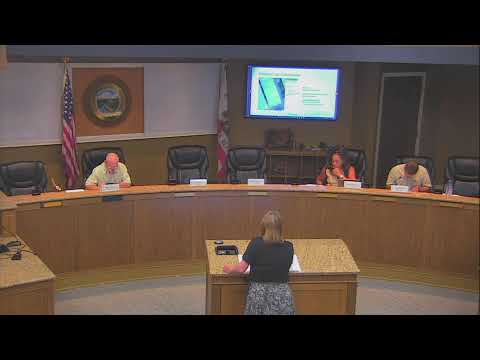
Catherine Hansford, consultant with Hansford Economic Consulting, presented a proposed fee structure to the Wyandotte Creek Groundwater Sustainability Agency at the board meeting, recommending a two-part model that would charge all parcels a parcel-level administrative fee and assess groundwater users an additional use-based fee.
Hansford told the board the model was adapted from a fee the consultant prepared for the Vina GSA and would allocate next fiscal year’s roughly $214,000 budget between an administrative “part 1” fee and a user-driven “part 2” fee. Using the consultant’s illustrative calculations, the budget was split about 61% to part 1 and 39% to part 2. Hansford said that corresponds to an illustrative part 1 charge of $10.68 per parcel per year, an agricultural part 2 charge of $5.80 per cropped acre per year, and a domestic (developed-parcel) part 2 charge of $0.44 per developed parcel per year. Hansford described those figures as representative “ballpark” numbers that would be refined before any formal adoption.
Why it matters: The fee structure determines who pays for ongoing GSA tasks under California’s Sustainable Groundwater Management Act (SGMA) and whether costs fall more on agricultural pumpers, domestic users or all landowners. Hansford said the regulatory fee approach (commonly referred to in the presentation as a Proposition 26-style regulatory fee) is intended to pay for reporting, monitoring and other activities the state requires of GSAs;…
Already have an account? Log in
Subscribe to keep reading
Unlock the rest of this article — and every article on Citizen Portal.
- Unlimited articles
- AI-powered breakdowns of topics, speakers, decisions, and budgets
- Instant alerts when your location has a new meeting
- Follow topics and more locations
- 1,000 AI Insights / month, plus AI Chat