Get Full Government Meeting Transcripts, Videos, & Alerts Forever!
Get email alerts on the Parks Recreation topic
No spam. Unsubscribe anytime.
Reno County to formalize special parks and recreation grant policy for small towns and groups
Summary
County staff presented a draft policy for a Special Parks and Recreation Fund (supported by county share of liquor tax receipts) to award small grants for playgrounds, trails, community gardens and underserved-area projects; commissioners directed staff to prepare a resolution for formal adoption.
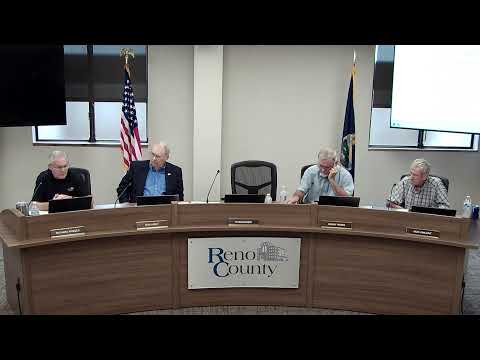
Reno County staff introduced a draft Special Parks and Recreation Fund policy at the Aug. 27 commission meeting intended to allocate a modest county special-liquor-tax fund to parks and recreation projects across the county.
"The purpose of it is to establish a financial support for the development enhancement and accessibility of parks and recreational opportunities throughout the county," said Joshua Chunga, a Reno County public-management intern who drafted the policy. The presentation said the fund is supported by a portion of the state alcoholic-liquor receipts that flow to counties and, by statute, must be used for certain designated purposes. The policy proposes an annual application window (Jan. 1–Feb. 28), project eligibility lists (playground upgrades, trails, event infrastructure, mobile pop-up recreation, accessibility improvements), midpoint reporting and an awards committee made up of county staff, municipal representatives and county members.
Staff told commissioners the county has accumulated roughly $60,000 in the special parks fund because the annual receipts are modest (roughly $15–$20,000 per year historically) and the money has not been distributed since 2023. The policy would create a transparent application and award process, give priority to smaller municipalities and underserved areas, and require recipients to complete reporting documentation before future eligibility.
Several commissioners said smaller towns could benefit and discussed local examples. One commissioner asked staff to clarify that the City of Hutchinson’s municipal allocations (from liquor receipts collected inside Hutchinson) make it ineligible to receive the county special parks funds; staff confirmed that organizations inside Hutchinson could apply but the city itself receives separate allocations under state rules.
By unanimous consent the commission directed staff to draft a resolution for formal adoption of the policy and return it on a future agenda.
Ending: Staff will prepare a resolution for the next meeting to formalize the application process and award criteria; the policy is designed for small-scale projects and to spend accumulated funds rather than leave them idle.