Get Full Government Meeting Transcripts, Videos, & Alerts Forever!
Get email alerts on the Property Boundary Adjustments topic
No spam. Unsubscribe anytime.
Planning commission recommends changes to property boundary rules to match state law, reinstates nonconforming‑lot language
Summary
The commission recommended approval of Ordinance 25‑30 to align local code with state changes that rename "lot line adjustments" to "property boundary adjustments," add boundary‑establishment procedures, and require plat amendments in some subdivision cases. Commissioners moved to reinstate a code provision protecting certain nonconforming lots.
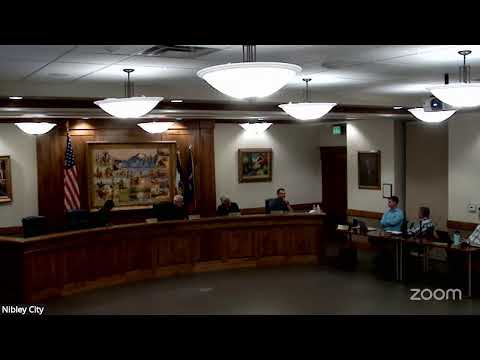
The Nibley City Planning Commission on Aug. 28 voted to recommend approval of Ordinance 25‑30, a code update that aligns city procedures with recent state law changes for property boundary adjustments, boundary establishment, and plat amendment processes.
Lehi Roberts, city planner, summarized the state changes and how the draft ordinance adapts local code. “What’s currently in Nibley City code is parcel boundary adjustments and lot line adjustments. And the state legislature… changed the terminology. So they’re now called property boundary adjustments,” Roberts said. He explained there are two state categories: a simple property boundary adjustment (between two owners with no impacts to easements or public utilities) and a full boundary adjustment, which may require a plat amendment if the property lies within a recorded subdivision.
Roberts said the draft preserves administrative approval by the city planner or city engineer for simple adjustments and adds the recommended option to require a plat amendment for full boundary adjustments in subdivisions, following advice from the county recorder’s office. “They recommended that… it’s a little cleaner and easier to find the documentation through a plat amendment,” Roberts said.
Tom Dickinson clarified that a full boundary adjustment would trigger the plat amendment only if the properties are within an existing recorded subdivision.
Commission discussion also focused on a deleted provision about nonconforming lots. Commissioners said the existing code allowed a lot‑line/parcel adjustment for an existing nonconforming lot provided the change did not worsen conforming status for established standards such as lot size or frontage. Multiple commissioners recommended reinstating that provision to avoid creating a loophole that would make one lot less conforming to gain conformity for another.
Troy moved to recommend approval of Ordinance 25‑30 with an amendment: replace the terms “lot line/parcel boundary” with “property boundary” and restore the nonconforming‑lot provision referenced in the existing code. Claire seconded the motion. The commission voted to recommend approval with that change.
Roberts said the change chiefly updates terminology, preserves staff’s administrative authority for simple adjustments, and clarifies when a plat amendment is required for full adjustments within subdivisions.