Get Full Government Meeting Transcripts, Videos, & Alerts Forever!
Get email alerts on the Subdivision Development Agreement topic
No spam. Unsubscribe anytime.
Planning commission approves development agreement for 40‑lot Heritage Parkway subdivision
Summary
The Nibley City Planning Commission recommended approval of a development agreement for Heritage Parkway, a 40‑lot, multi‑phase standard subdivision at roughly 2701 South and 1200 West. Staff said most terms follow city code; commissioners discussed street‑tree installation and phasing protections.
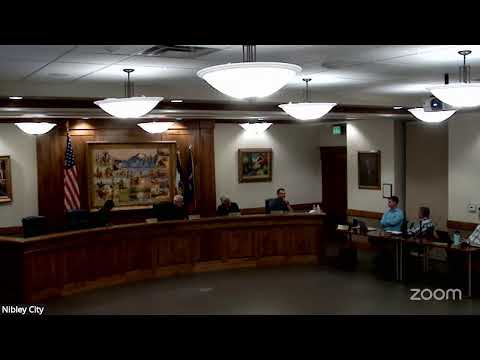
The Nibley City Planning Commission on Aug. 28 recommended approval of a development agreement for Heritage Parkway Subdivision, a 40‑lot, multi‑phase standard subdivision at approximately 2701 South and 1200 West.
City planner Lehi Roberts told the commission the preliminary plat already was approved by the planning commission and that the development agreement is required because the project will be built in multiple phases. “The only reason this requires a development agreement is because it has multiple phases within the development,” Roberts said, adding most of the agreement’s language is boilerplate from city code.
Commissioners and staff focused discussion on two technical items: protections tied to phasing and the mechanism for installing street trees. Tom Dickinson, city engineer, described the options when developers begin construction before final plat recordation: they may record a final plat with phased infrastructure and provide bonds for remaining improvements, and, if accepted, post a 10% warranty bond. “Once they do get all the work done, they have a couple options. They can finish a portion of the work and decide … to record that. Then they would have to provide a bond for the remaining infrastructure improvements,” Dickinson said.
Roberts explained the development agreement includes a provision on street trees: a developer may install the trees or pay a fee in lieu. The agreement left the fee blank pending contractor bids the developer will provide. “We have an option on whether the developer would put in the street trees or pay the city a fee in lieu of the trees,” Roberts said.
Commissioners pressed staff on how the city verifies tree installation and maintenance when installation is deferred until late phases. Roberts said the city typically requires trees either be included in the developer’s surety/bond or a fee paid for city installation; staff had recently asked developers to submit three bids from landscape contractors to set an appropriate fee amount. Dickinson noted the city code requires maintenance once trees are planted.
Troy moved to recommend approval of the development agreement; Claire seconded the motion. The commission voted to recommend approval; a single opposition was recorded during the vote (speaker not specified in the transcript). The commission’s recommendation is to record the development agreement with the final plat when the developer is ready to record.
The approval does not alter the previously approved preliminary plat. Roberts said construction drawings and final plat technical reviews are complete for the first phase, and the first phase already is under construction at the developer’s risk under state and city procedures.
Staff said the development agreement will be recorded alongside the final plat, and the city will collect any applicable water shares and other development fees before final acceptance. The commission did not add extra conditions beyond standard phasing and surety protections and direction to finalize the missing tree fee once bids are provided.
If the developer records portions of the project before completing all infrastructure, city code requires bonds for incomplete improvements and a 10% warranty bond after final acceptance.