Get Full Government Meeting Transcripts, Videos, & Alerts Forever!
Get email alerts on the Tax Increment Financing topic
No spam. Unsubscribe anytime.
Committee greenlights Destination and Catalyst TIF districts and amends Black Hills Industrial TID amid heated public comment
Summary
The committee approved creation and project plans for the Rapid City Destination and Catalyst tax increment financing (TIF) districts and an amendment to Black Hills Industrial Center TID No. 86; public commenters and council members debated transparency, developer risk, school impacts and whether some projects should be put to a public vote.
The Rapid City Legal and Finance Committee on Aug. 27 approved several tax increment financing (TIF) actions after extensive public comment: an amendment to the Black Hills Industrial Center TID No. 86 project plan, creation of the Rapid City Destination TIF district and approval of its project plan, and creation and project plan approval for the Rapid City Catalyst District (committee approved phase 1 and phase 2 of the Catalyst plan).
Public comment covered a wide range of views: opponents urged public votes and expressed concern about diverting future tax revenue to private development, while proponents — including hospitality and sports‑community representatives — said the districts would expand tourism, recreation and infrastructure and provide economic benefits to schools and the city.
Key public statements and developer clarifications: Joel Brannon, the Liberty Land project manager, told the committee that the submitted Destination district plan remained unchanged and that a city publishing error prompted the hearing. Brannon said the city would invest about $10 million in streets and infrastructure for the district (to be repaid from the TIF), while the developer would be responsible for roughly $115 million in other improvements; he also offered conservative revenue estimates that, if the project performs as projected, would increase property‑tax collections from the site by about 1,800 times current levels and deliver multi‑million dollar annual payments to the school district, county and city when the increment is realized.
Supporters at the podium included Visit Rapid City, Rushmore Swim Team leadership and project proponents who called the sports complex and associated facilities a way to extend tourism into the off season, attract tournaments, and provide local recreation and year‑round use of existing facilities such as Roosevelt Swim Center. Opponents said TIFs shift current tax revenue to future obligations, risk subsidizing private development, and had not been presented with sufficient public notice in at least one instance.
Staff and council discussion: Planning and transportation staff described alignment with the city’s bike/ped plan for the Legacy Trail grant (discussed earlier) and noted that permitted industrial zoning can include data centers; Director Fisher explained that a data center would require feasibility studies, site plans and utilities approvals and would be subject to land‑use regulations and public hearings if it failed to meet lot‑size or other zoning standards.
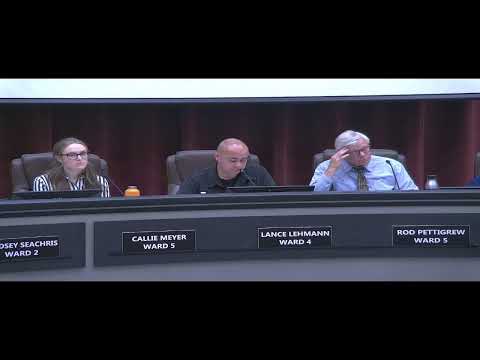
Votes and outcomes: The committee approved the amendment to the Black Hills Industrial Center TID No. 86 project plan; it also passed resolutions to create the Rapid City Destination TIF and to approve the Destination project plan (both votes recorded two no votes from Councilmembers Temang and Rod Pettigrew); the committee created the Rapid City Catalyst District and approved its project plan with a single no vote from Pettigrew. Several council members said they had reviewed the materials and that phase 1 and phase 2 of the Catalyst plan (field house construction, certain streets and utility extensions) were the immediate priority; councilmembers who opposed said the scale and timing raised transparency and valuation concerns.
Why it matters: The TIF approvals authorize the city to use future incremental property‑tax revenue and other TIF mechanisms to fund infrastructure and help support large private development projects that city staff and proponents say will generate new jobs, tourism revenue and public amenities. Opponents argued the plans should have had wider public vetting or a ballot measure.
Next steps: Staff will proceed with the approved project plans and phase 1/2 work identified for the Catalyst District; additional phases and boundary changes remain subject to future review and potential amendments.