
Olentangy reshapes wellness services, cites early gains on student mental-health measures
Get AI-powered insights, summaries, and transcripts
Sign Up Free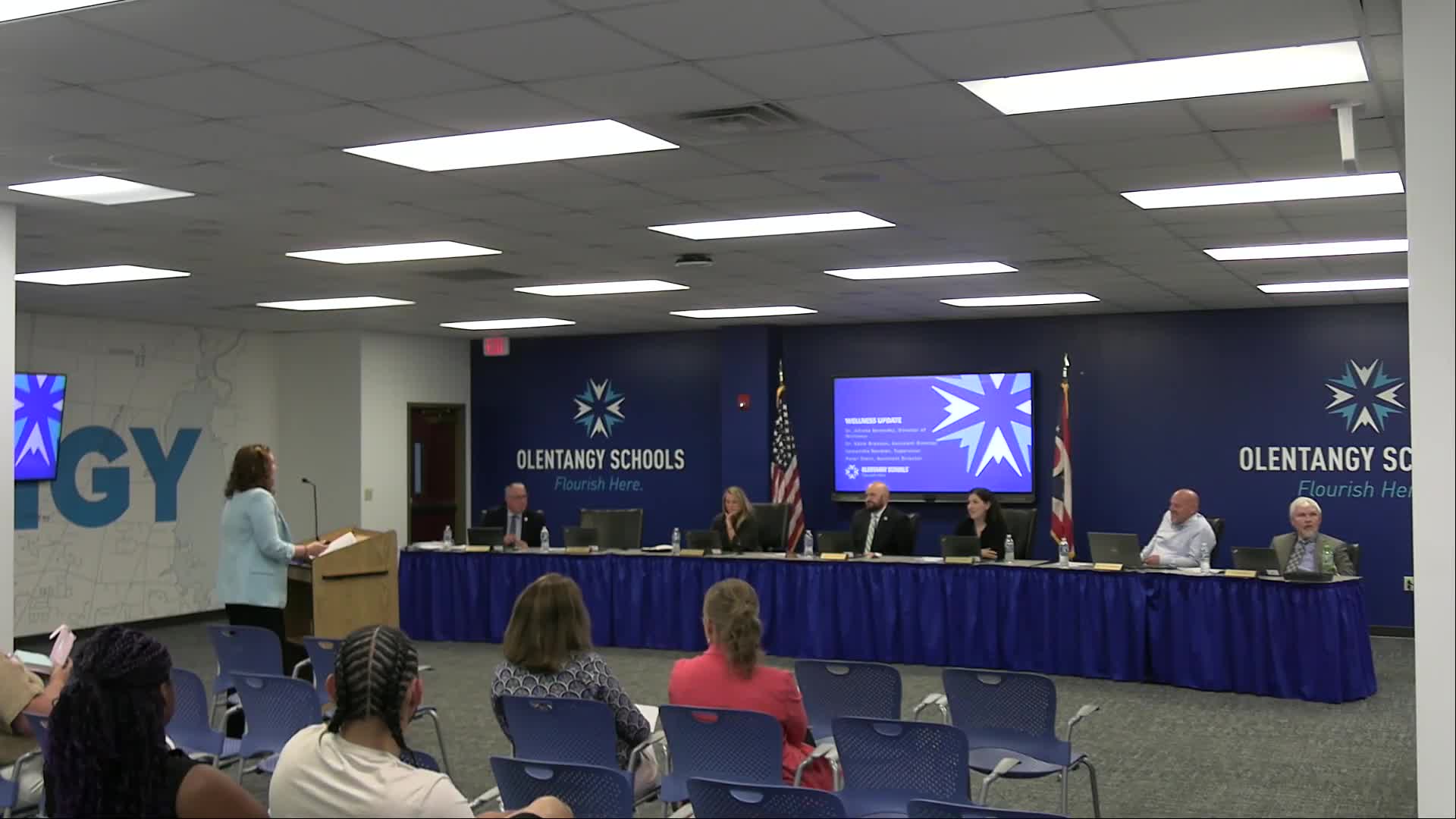
Summary
A newly named Department of Wellness outlined a district plan to expand mental-health supports, reported preliminary improvements on the Pediatric Symptom Checklist and described steps toward national accreditation and data-driven programming.
Olentangy Local Schools on Aug. 27 presented a reorganized Department of Wellness — renamed from Student Well-Being — and reported early outcome data from school-based mental-health services.
The department said the reorganization intentionally combines student and staff wellness efforts to reduce nonacademic barriers to learning. "We wanted to really take a better picture of all of the different things that the department was doing," Dr. K. Barrons (presenting as department lead) said. The department will continue universal prevention programs while expanding tiered, individualized supports.
Measured outcomes: Samantha Norman, wellness outcomes lead, described two measures the district is now tracking: effectiveness measured by the Pediatric Symptom Checklist (PSC) and satisfaction with services. Norman said the district began baseline PSC collection in January and took follow-ups in later quarters; a decrease in PSC scores between the January baseline and the final measure in May indicates improved student functioning on both parent and student self-reports. Norman also reported that nearly all satisfaction-survey responses were "agree" or "strongly agree," and she read several positive free-response comments.
Programs and partnerships: The department is pursuing OMOS certification, national Council on Accreditation review and a two-year engagement with the JED Foundation/American Superintendents Association District Mental Health Initiative to map services and close gaps. Officials noted contract changes that moved some services from outside vendors to in-house hires; the district said that saved money while expanding staff capacity. The department also relied on community partners to deliver prevention education required under House Bill 123.
Summer and targeted programs: The district ran an in-house social-emotional summer program that enrolled students from 12 elementary schools and all middle schools; the OSU Coach Beyond leadership program reached 75 student-athletes, the wellness team reported. Officials said OSU Wexner Medical Center conducted 29 events and connected with about 2,300 students and staff last year.
Student voice and experience: Peter Stern, student-and-staff-experience lead, summarized climate-and-culture findings and said students repeatedly asked for more interest-driven opportunities, amplified student voice, and more real-world experiences — items already linked to BridgeEd career-exploration expansion. Stern described pilot peer-mediator training at Berlin High School and plans to census clubs and extracurricular offerings to expand access.
Next steps: The department will continue quarterly PSC measurement, expand its satisfaction-survey use and finalize strategic planning with JED/ASSA data over the coming year. Officials asked the board to approve new members to the district mental-health committee during the meeting agenda.
Ending: Wellness leaders said they will continue building internal capacity, pursuing accreditation and tracking outcomes to tie mental-health supports back to academic goals.