
Olentangy unifies curriculum, instructional technology and partnerships; pilots new math and literacy programs
Get AI-powered insights, summaries, and transcripts
Sign Up Free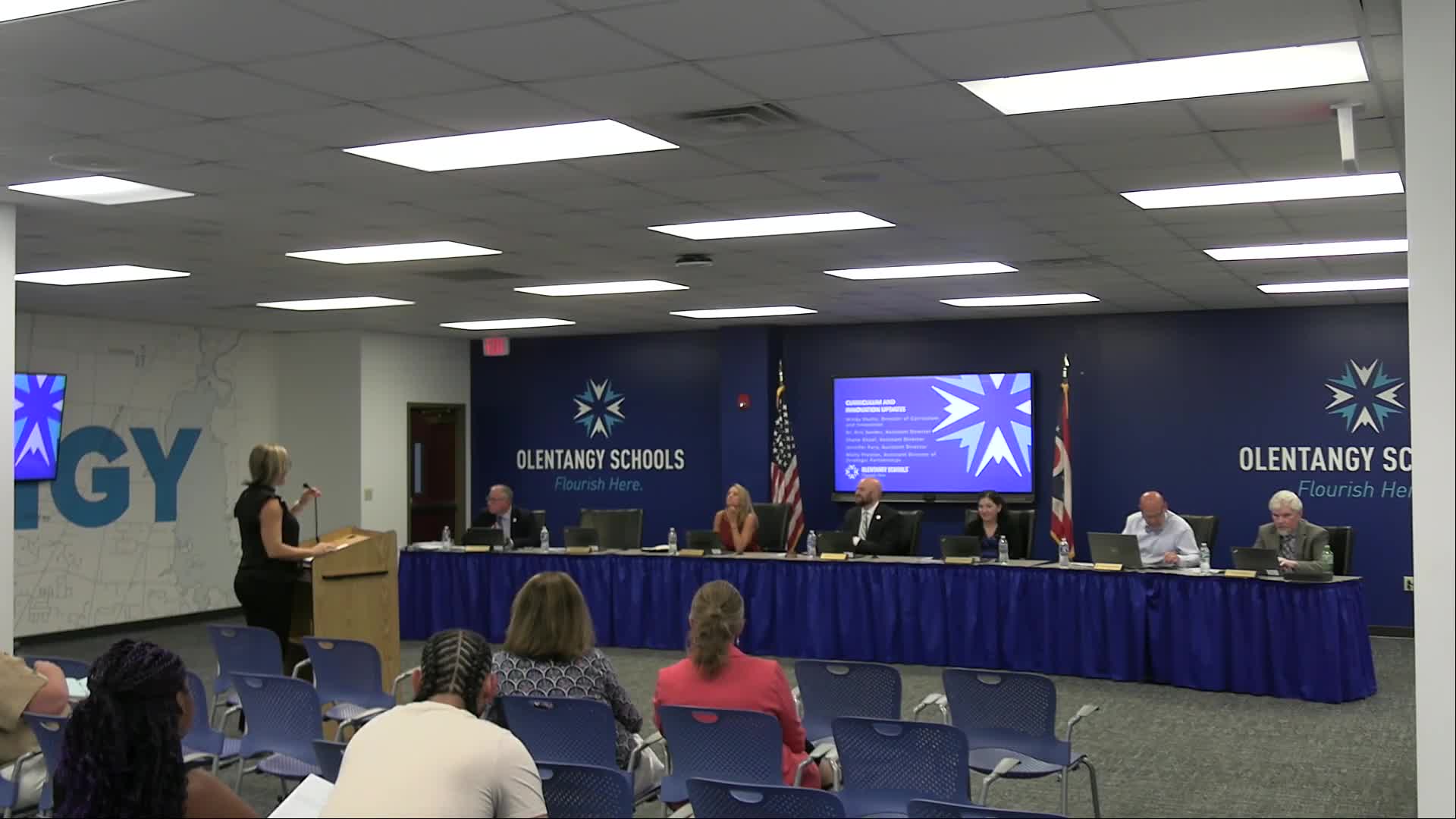
Summary
The district unveiled a new Curriculum and Innovation department that merges curriculum, instructional technology and strategic partnerships and announced pilots and adoptions across elementary, middle and high school math and literacy programs.
Olentangy Local Schools leaders on Aug. 27 announced a new Curriculum and Innovation department that consolidates curriculum, instructional-technology and strategic-partnership functions and described a slate of curriculum adoptions and pilots across grade levels.
District officials say the reorganization is meant to produce consistent classroom practice, improve teacher supports and strengthen connections between academic content and community partners. "This department brings together curriculum, instructional technology, and strategic partnerships into one unified team," Mindy Schultz, director of Curriculum and Innovation, told the board. "We're better positioned to ensure every student's experience is relevant, inclusive, and engaging."
Why it matters: The changes aim to create consistent instruction across 28 district buildings as Olentangy continues rapid growth. Officials emphasized districtwide alignment from elementary through high school and tied curriculum choices to broader student-experience goals such as equity, engagement and career readiness.
Elementary: Schultz said the district is in year 1 of adopting Benchmark Advance for elementary literacy and year 2 of the Bridges mathematics curriculum. All elementary classroom teachers and building administrators received Benchmark Advance training; fourth- and fifth-grade teachers also trained in the 95% group intermediate word-study program. District literacy staff developed aligned resources — read-aloud guidance, vocabulary cards and standards-linked tools — to support rollout. Schultz noted collaboration across content teams to connect Benchmark Advance themes with unified-arts lessons and English-learner supports.
Middle school: Shane Schoaff, assistant director of intermediate Curriculum and Innovation, described work to redesign a flexible student period formerly used for intervention or catch-up. The district will pilot two middle-school math curricula across the six middle schools: Carnegie Math this fall and CPM (College Preparatory Mathematics) in six-week rotations beginning in January. Schoaff said the pilots will run in all middle-school math courses and that teachers and students will provide implementation feedback ahead of an adoption recommendation.
High school and CTE: Dr. Chris Sander outlined high-school priorities, including a math initiative framed around building "math-positive" classroom culture and a January public screening called "Count It Out, Math is Power." Sander also described continued English-language-arts work centered on five classroom pursuits (inquiry, expression, reflection, community and autonomy) and said the district launched a year-one biotechnology Career-Technical Education (CTE) program at STEM Academy (a CTE-26 program).
Career connections: Molly Preston summarized BridgeEd (career-exploration) activities that expanded last year and will scale this school year. BridgeEd hosted career-exploration days at middle schools with partners such as Robertson Construction, OSU Wexner Medical Center, Columbus State and corporate partners including JPMorgan Chase and Accenture. Preston said two graduates participated in paid JPMorgan internships last year and that some partners now plan districtwide offerings.
Professional development: Jen Furey described the district's layered professional-learning model, anchored by three district PD days and in-district conferences (Think Tank and Elevate), building visits and a Professional Development Academy. The district's PD focus for the year is "resilience and assessment," she said.
Next steps: Administrators said pilots and new-resource implementations will be monitored during the school year and that formal adoption recommendations will return to the board after staff and student feedback.
"We're going to collect that feedback from staff and students, and monitor that closely, and then hopefully come back for a recommendation to you all for adoption," Schoaff said.
Ending: District leaders asked the community to engage with the pilot process and noted that adoption decisions will be based on evidence gathered during the school year.