Get Full Government Meeting Transcripts, Videos, & Alerts Forever!
Get email alerts on the K12 Budget topic
No spam. Unsubscribe anytime.
Oshkosh Area School District approves 2025-26 budget, authorizes short-term borrowing line
Summary
The Oshkosh Area School District board approved a $2025-26 budget on Aug. 27, 2025, and authorized renewal of a short-term line of credit to cover cash shortfalls before state aid is certified. Administrators cautioned figures may change after the state Oct. 15 certification.
The Oshkosh Area School District Board of Education approved the district's 2025-26 budget on Aug. 27, 2025, and voted to renew a short-term borrowing line of credit to cover payroll and other obligations until state aid and final property valuations are certified.
The budget presentation by Drew Neehans, the district finance staff member who led the hearing, showed an estimated total levy of just over $68 million made up of an $84 million projected state-aid figure, roughly $44 million in local tax levy under the state revenue-limit calculation, a $21.5 million referendum-approved debt levy (Fund 39) and about $2.7 million for community services. Neehans cautioned the district's numbers are preliminary and subject to change when the state certifies enrollment, property value and aid on Oct. 15.
Why it matters: the board said it needed a budget approved now so the district could short-term borrow for cash needs that arise in the gap between tax payments and the start of the fiscal year. Several board members and administrators said the plan is tight and that adjustments are likely after Oct. 15. Opponents warned the levy increase will burden voters already facing other local tax pressures.
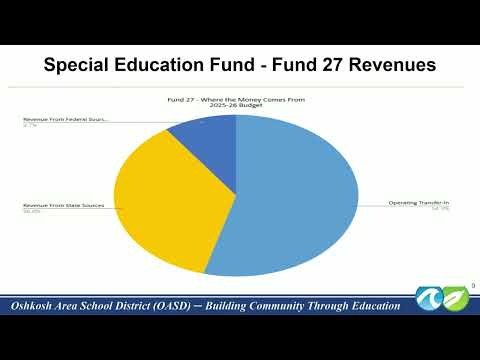
Neehans opened the budget presentation by calling the figures "our best guesstimate at this time," and he explained why some funds do not balance on a single-year presentation because of timing differences in bond proceeds and interest payments. He said Fund 10 (the general fund) currently shows state resources in a 600 source code line and that special education funding (Fund 27) will see a sizable transfer in from the general fund, largely because the state increased special-education reimbursement from roughly 30% to 42%.
"We are going to have a sizable surplus" in the capital projects fund, Neehans said, noting the district recently bonded for nearly $80 million in projects. On the tax side, he said the revenue-limit calculation plus the district's estimate of equalized value would produce a mill rate near 7.86 cents if the preliminary numbers hold, which would be a slight decrease in mill rate but could still mean higher bills for individual homeowners if their equalized values rose.
Board members asked for clarifications on timing and risk. Dr. Ford asked when the state numbers are final; Neehans said the state certifies figures on Oct. 15. Dr. Herzog supported approving the budget now to allow public review and to avoid an emergency vote in October; Dr. Hess said he would not support the budget as presented and questioned the timing and structure of levy and debt decisions.
Board debate emphasized three themes: the district's limited cash on hand and the resulting need to short-term borrow; the structural pressure created by state revenue limits paired with modest state aid actions and rising personnel costs; and the desire by some board members for more visible evidence that past and future investments are producing measurable gains in student outcomes. Kelly (board member) said she could not vote for the budget, citing concerns that spending has not produced expected improvements on some measures.
After debate, the board moved and approved the budget. The board also voted to renew the district's short-term line of credit through Nicolet Bank; the roll call for the credit renewal recorded aye votes from the members present.
The district reiterated that the numbers presented were provisional. Neehans told the board he will return after Oct. 15 with updated certified figures and that auditors will require an amended budget if actual revenues and expenditures vary materially from the approved numbers. The administration and board said policy allows an amended budget with a supermajority vote if required.
Votes at a glance
- Approval of the 2025-26 budget: motion by Herzog; second by Kelly; outcome: approved. Board debate included explicit opposition from at least two members during discussion; the budget will be revisited after state certification and may be amended.
- Renewal of short-term borrowing (line of credit): motion by Herzog; second by DeWitt; outcome: approved (recorded roll-call ayes from members present).
The board president and district administration said the next formal presentation of final certified numbers will follow the state's Oct. 15 certification. Drew Neehans and other staff will return with updated levy, state-aid and mill-rate calculations and any recommended amendments.