Get Full Government Meeting Transcripts, Videos, & Alerts Forever!
Get email alerts on the Consumer Protection topic
No spam. Unsubscribe anytime.
Consumers and public adjusters tell Georgia committee of denied claims, appraisal and statute-of-limitations hurdles after storms
Summary
Multiple witnesses described denied or undervalued homeowner claims, problems with nonrenewals and use of satellites/drones for underwriting; attorneys urged statute-of-limitations uniformity and clearer policy disclosures on reduced coverage.
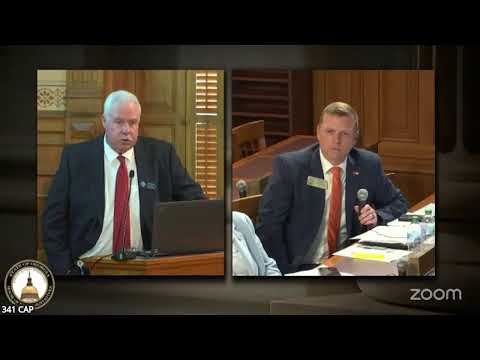
Several witnesses at the Aug. 15 Insurance Rate Study Committee hearing described difficulties consumers face when filing homeowner and storm-related claims, and urged statutory and administrative changes.
Wendell Couch, who described losses at a rental property in Florida after storms, said he faced a prolonged fight with an insurer and that adjusters and company practices made recovery difficult. Omar Hall, a public adjuster, said public adjusters frequently see policies not honored as written and that appraisal clauses agreed in policies are sometimes ignored by carriers — forcing homeowners into litigation as the only recourse.
Attorney Remington Huggins, who represents property claimants, urged the committee to standardize statute-of-limitations periods for property claims across Georgia (several neighboring states use three- or five-year statutory periods) because short policy deadlines can force homeowners to file suit before an insurer completes a technical investigation of complex storm damage. Huggins also recommended that when insurers reduce coverage at renewal — for example converting replacement-cost coverage to actual-cash-value — the insurer must notify the policyholder, explain the change and obtain signed acknowledgment.
Why it matters: Witnesses said routine industry practices can prevent claimants from receiving full, timely reimbursement and create consumer distrust that can depress claim reporting and complicate market transparency. The committee was told that some insurers use remote sensing (satellite imagery or drones) to assess roofs and other vulnerabilities; witnesses and regulators discussed bulletin- or code-level guidance to ensure accuracy and due process for policyholders.
Ending: Committee members asked the Department of Insurance for copies of relevant consumer-service bulletins and for further study of statutory options (statute of limitations; appraisal clause enforcement; consumer notice on coverage changes).