Get Full Government Meeting Transcripts, Videos, & Alerts Forever!
Get email alerts on the 988 911 Integration topic
No spam. Unsubscribe anytime.
Officials: 988, mobile crisis teams and telehealth reducing need for in-person responses
Summary
Panelists said 988, mobile crisis teams and telehealth are de-escalating many calls without in-person response; ADAMH supplements 988 and local data show most behavioral-health calls still enter through 911.
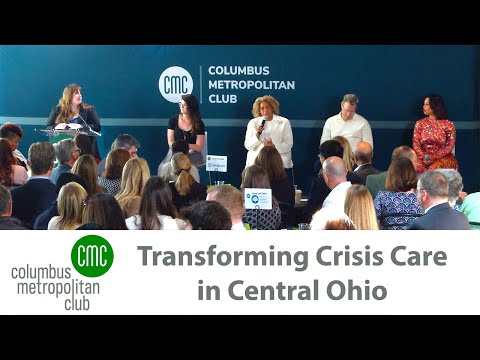
Local behavioral-health leaders told a Columbus forum that 988, combined with mobile crisis-response teams and telehealth, is de-escalating the majority of crisis calls and reducing unnecessary emergency-department visits.
"988 is what we recommend as the first number to call when you are in crisis," Erica Clark Jones, chief executive officer of the Alcohol, Drug, and Mental Health Board of Franklin County, said. Clark Jones said many calls are triaged and de-escalated on the line by trained professionals.
Dr. Brian Stroh of NETCare described 988 as an "on-demand telehealth" system that routes calls to a consortium of providers and, he said, roughly 93 percent of those contacts do not require an in-person response. "Think of it kind of as on demand telehealth that is not going through your insurance," Stroh said.
Panelists noted that local call volumes remain high: one speaker said the community sees an estimated 350 to 400 crisis interactions per day across 988, 911 and facility visits. They also reported that about 80 percent of behavioral-health calls still enter through 911 rather than 988 locally; panelists said they want to reverse that ratio so more people first contact 988 when appropriate.
ADAMH supplements 988 operations in Franklin County with local funds: Clark Jones said the board provides about $1,100,000 a year to ensure calls are answered and connected to services. She also said ADAMH directs a significant portion of its budget to crisis work (31 percent) and that the board’s largest revenue source is a property-tax levy passed by county voters in 2020; the levy was on the ballot again in the fall, she said.
Panelists emphasized that while telephonic de-escalation handles many calls, mobile crisis response teams are still essential for the roughly 7 percent of situations requiring an in-person intervention. They said integrated dispatch protocols between 911 and 988 — newly agreed upon, panelists said — will allow 911 centers to transfer calls to 988 when appropriate.
Speakers urged residents to use 988 for behavioral-health crises when possible and said continued investment in mobile teams and data collection will be necessary to measure and scale the system.