Get Full Government Meeting Transcripts, Videos, & Alerts Forever!
Get email alerts on the Crisis Care Center topic
No spam. Unsubscribe anytime.
Franklin County Crisis Care Center to open with ‘no wrong door’ model and on-site services
Summary
Franklin County’s new Crisis Care Center will offer a 24/7 no-wrong-door facility with observation recliners, behavioral urgent care, an on-site pharmacy and space for community partners, officials said at a public forum in Columbus.
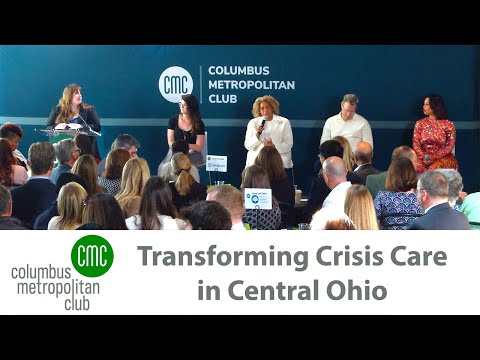
The soon-to-open Franklin County Crisis Care Center will operate 24 hours a day and offer a “no wrong door” approach to adults in psychiatric or substance-use crisis, Franklin County and behavioral-health leaders said at a Columbus Landmarks Forum on crisis care.
Erica Clark Jones, chief executive officer of the Alcohol, Drug, and Mental Health Board of Franklin County (ADAMH), said the center will provide short-term observation, light medical care and space for community treatment partners to connect patients to follow-up services. “There is a dedicated entrance for first responders, law enforcement officers, and mobile crisis response teams so that they never have to wait and they do not get turned away,” Clark Jones said.
ADAMH and system partners designed the facility to be person-centered and to keep the patient’s journey moving forward. The center will include 60 medical recliners for observation stays of up to 23 hours, a behavioral-health urgent care clinic, an on-site pharmacy and planned inpatient beds on a second level for longer observation when community placements are unavailable, Clark Jones said. The facility also will reserve workspace for community providers to develop intake relationships while a person is still on-site.
Dr. Brian Stroh, CEO and medical director of NETCare, said the center will complement longstanding community crisis services rather than replace them. “We have had community-based crisis capacity for decades,” he said, adding that the center expands local capacity and aims to treat medical issues on-site in partnership with OSU Wexner Medical Center so patients are not redirected to emergency departments for concurrent medical needs.
Panelists said the building’s layout separates the entrance lobby from the discharge lobby to avoid re-triggering people when they leave and to ensure patients depart with supports in hand, including medications and warm handoffs to community agencies. Jonathan Thomas, a staff member involved in the project, was identified at the forum as a resource for technical questions about the center’s design and operations.
The center’s leaders said the facility is intended to reduce long emergency-department stays and to give clinicians and mobile teams a tailored place to bring people in crisis. Clark Jones said a public website includes photographs and more detail about the patient journey through the center.
If the center meets its operational goals, officials said it will be one part of a wider continuum that includes 988 crisis-call services, mobile crisis teams and community follow-up programs.