Get Full Government Meeting Transcripts, Videos, & Alerts Forever!
Get email alerts on the Environment Stormwater topic
No spam. Unsubscribe anytime.
Council reviews stormwater code changes to meet new state permit; discussion moved to Sept. 10
Summary
Public works presented proposed updates to South Salt Lake’s stormwater code to comply with new MS4 permit requirements and recent state bills; council moved the item to unfinished business for Sept. 10 for further consideration.
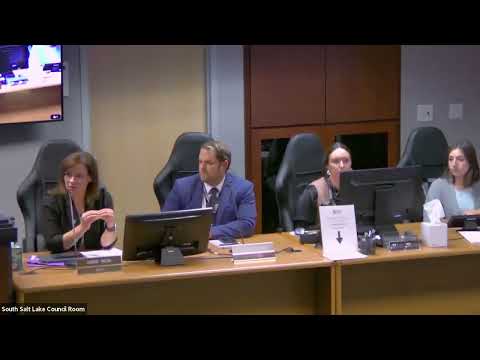
South Salt Lake city staff reviewed a set of proposed stormwater ordinance amendments on Aug. 27 intended to align the city’s municipal code with changes in state law and a new small MS4 permit.
Corby Talbot of the Public Works Department said recent state legislation and permit changes — including references to HB507, SB220 and HB368 as cited in the presentation — require updates to definitions, inspection authorities and procedural timelines in the city’s code. Talbot said one clear correction is to the city’s equivalent residential unit (ERU) value used for stormwater billing: the code contains a drafting error and should read 3,700 square feet rather than 2,700.
Talbot described other substantive changes: updated definitions to match the new permit; allowances for electronic oversight inspections (contractors submitting photos/videos for monthly inspection purposes); modifications to SWIP (Stormwater Pollution Prevention Plan) review timelines and comment procedures; and clarified circumstances under which stop-work or work-order exceptions may be issued, tied to contractors’ use of best management practices. He said the city must allow electronic oversight inspections while retaining the ability to perform on-site inspections.
Talbot also noted a Total Maximum Daily Load (TMDL) for E. coli on the Jordan River and said staff proposed limiting some long-term stormwater management practices that could concentrate pet waste or other sources of bacterial loading — for example, disallowing dog parks on top of above-ground retention basins. The presenter said many of the legislative changes originated from large residential developers and alter review processes and timelines; staff reorganized the code to reflect those statutory requirements.
Council discussed the presentation and asked clarifying questions about Certificate of Occupancy (C of O) timing and the practical effects for projects. A councilmember summarized the change as more favorable to developers in some respects; Talbot confirmed that several changes followed industry requests but emphasized the city is meeting state requirements. Councilmember Ray moved to place the draft ordinance back on the agenda as unfinished business for the council’s next regular meeting on Sept. 10; Councilmember Clarissa seconded and the motion passed by voice vote.
Staff indicated they will bring the finalized ordinance back to the council for formal action after additional review and any edits requested by council.