
IRPS committee defers resolution urging LGBTQ+ police liaison and hate‑crime training to October
Get AI-powered insights, summaries, and transcripts
Sign Up Free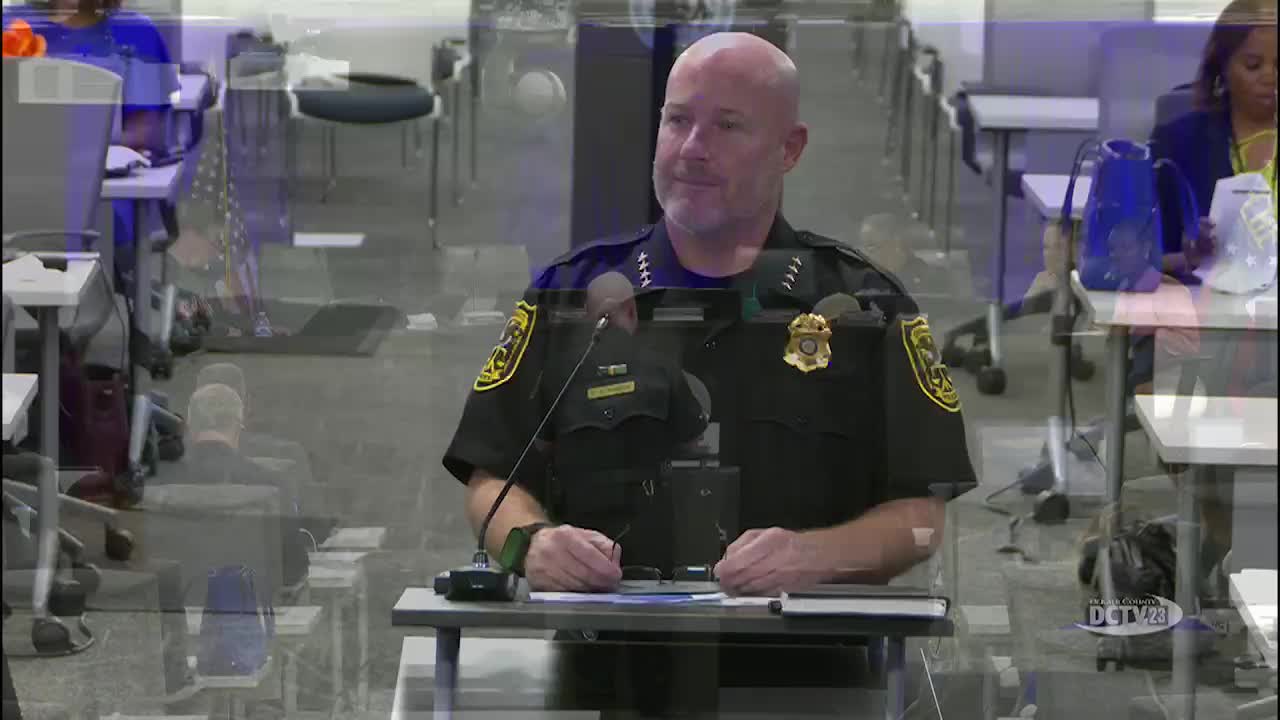
Summary
The IRPS Committee deferred consideration of a resolution that would request the county administration implement a DeKalb County Police Department LGBTQ+ police‑liaison position and require hate‑crime identification training.
The IRPS Committee deferred consideration of a resolution that would request the county administration implement a DeKalb County Police Department LGBTQ+ police‑liaison position and require hate‑crime identification training.
Commissioner Ted Terry moved to defer the item to the next IRPS meeting on Oct. 7; the motion was seconded and carried. The resolution appears in the packet as item 2025‑1107.
During discussion, Terry said the resolution follows recommendations found in a DeKalb Equality progress report and a broader concern about identity‑based incidents in the county. He asked the chief and staff to consider whether a liaison position would be a formal hire or a secondary assignment and suggested the change could serve as a recruitment and outreach tool.
Chief Padrick said he "completely support[s] the intent of the liaison" but expressed concern about singling out one group in a highly diverse county. Padrick described a department‑wide approach he prefers: ensuring every officer is trained to serve as a liaison for all communities. He also said that, as interim chief, he worked with a department training sergeant to create a sensitivity course for the LGBTQ+ community; that course was submitted to the academy director and then to the Georgia Peace Officer Standards and Training Council (Georgia POST) and has been approved. "Once it was approved by the academy director as well, I instructed them to send it to Georgia Post ... We have since gotten approval for that class to receive Georgia Post credit," Padrick said. He told the committee the course will be added to next year’s mandated in‑service training for all officers.
Padrick also provided a department summary of reported hate‑crime related incidents from January 2024 through the present: he said the department recorded about 15 initial reports flagged as potential hate incidents in that period, and that he believed only two of those related specifically to LGBTQ+ identity; none had been adjudicated as formal hate‑crime convictions. He offered to provide the committee with specific numbers.
Commissioners debated two approaches: (1) a named liaison position focused on the LGBTQ+ community to provide a designated point of contact for community members who may not trust police generally, and (2) a department‑wide training and series of secondary liaison assignments so officers with relevant background or interest could be designated as points of contact. Several commissioners asked central staff to invite external stakeholders such as Georgia Equality to present best practices and to provide further data on incidents and local implementation models.
Because the committee requested additional data and community input, it voted to defer the item to the first IRPS meeting in October (Oct. 7). The committee asked central staff to collect incident counts, clarify existing nondiscrimination policies and to invite Georgia Equality or similar groups to present at a future meeting.
Ending: DeKalb police will deliver training and the committee deferred formal action pending additional data and stakeholder presentations.