
DeKalb delegation returns from Texas study tour with housing-first and coalition recommendations
Get AI-powered insights, summaries, and transcripts
Sign Up Free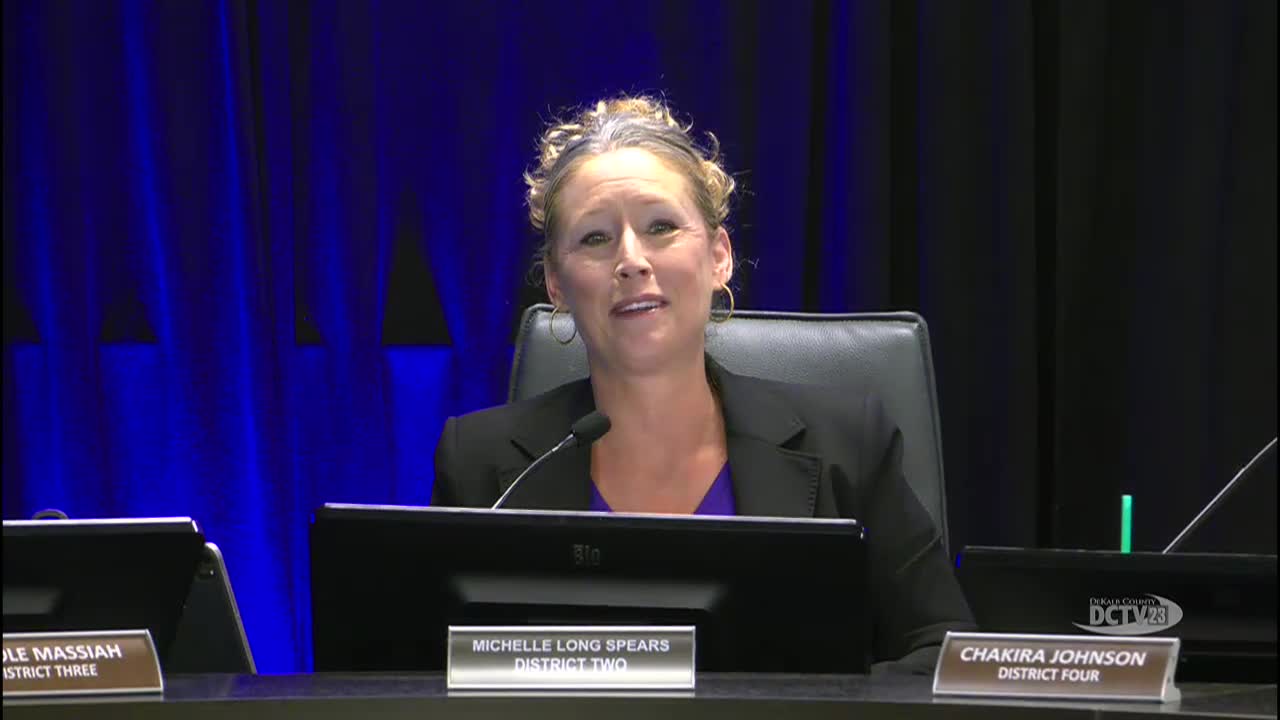
Summary
Delegation members reported lessons from San Antonio and Houston: centralized coalitions (501(c)(3) continuums of care), low‑barrier crisis response, permanent supportive housing, data-driven HMIS, and integrated behavioral health and animal services.
DeKalb County commissioners and local leaders who traveled to San Antonio and Houston to study homelessness responses told the full Board of Commissioners on Aug. 28 that both cities rely on broad public‑private coalitions, consolidated continuums of care and Housing First models to move people into permanent housing.
Commissioner Michelle Long Spears, who led the delegation, and delegation members described cross‑sector partnerships, single‑campus service models and data systems that the group said reduced chronic homelessness and improved outcomes for people with behavioral health needs.
Why it matters: DeKalb County is considering options to strengthen its local response to homelessness. Delegation members emphasized that both San Antonio and Houston operate regional, HUD‑designated continuums of care run as independent 501(c)(3) entities, which the presenters said allowed faster funding decisions, expanded philanthropic revenue streams and impartial governance.
What the delegation saw: key takeaways presented during the meeting included: - Haven for Hope (San Antonio): a 22‑acre campus operated by a nonprofit that combines low‑barrier shelter and transitional residential services with on‑site supportive services. Presenters said Haven for Hope has served tens of thousands of people over 15 years and reported strong cost‑benefit findings in past analyses. Delegates noted the campus model places many nonprofit partners under one roof to reduce duplication and improve access. - Tiny‑home and permanent supportive housing models: delegates visited smaller permanent units for older adults and mixed‑use developments that pair housing with on‑site services such as medical clinics, mental‑health care and job navigation. - Navigation centers and diversion programs (Houston/Harris County): delegates described low‑barrier “navigation” facilities and a jail‑diversion center (Harris Center) that provides assessment, short‑term stabilization and linkage to housing and treatment services. Harris County’s diversion program reported thousands of diversions and several million dollars in criminal‑justice cost savings, according to the delegation’s briefing. - Animal‑focused services: delegates highlighted San Antonio’s partnerships that allow unhoused people to keep pets, on‑site veterinary clinics and foster/adoption networks — a factor delegates said increases shelter uptake for people reluctant to relinquish animals. - Data and coordinated entry: both regions emphasized use of a Homeless Management Information System (HMIS) and shared dashboards to guide placement and measure progress.
Numbers presented by the delegation (reported by presenters): San Antonio area homelessness counts were reported at roughly 3,600 people with an estimated 51% having mental‑health concerns; delegation materials cited approximately $222 million in federal funding routed to service providers in 2025 in the region. Houston delegates said their coalition had housed more than 33,000 people since 2012 and reported a high success rate for permanent placements. The Harris County diversion program reported about 2,621 diversions with program‑level cost savings cited.
Discussion and local context: commissioners noted the Atlanta‑area governance environment is more fragmented — multiple counties and dozens of cities — compared with the single‑county examples. Delegates stressed the need for local coalition building, trust among partners and the potential benefits of an independent continuum‑of‑care entity to coordinate philanthropy and quick funding decisions. Several commissioners asked for the presentation slides to be circulated; staff said they would distribute the deck to commissioners.
Next steps: delegates urged DeKalb County leaders to consider: (1) stronger cross‑jurisdictional coordination, (2) expanding low‑barrier crisis response and diversion capacity, (3) integrating behavioral health services with housing responses, and (4) exploring funding vehicles that leverage public and philanthropic dollars. The board did not take formal action on policy changes during the Aug. 28 briefing.