
DeKalb County hears data on employee clinic partnership with Marathon Health
Get AI-powered insights, summaries, and transcripts
Sign Up Free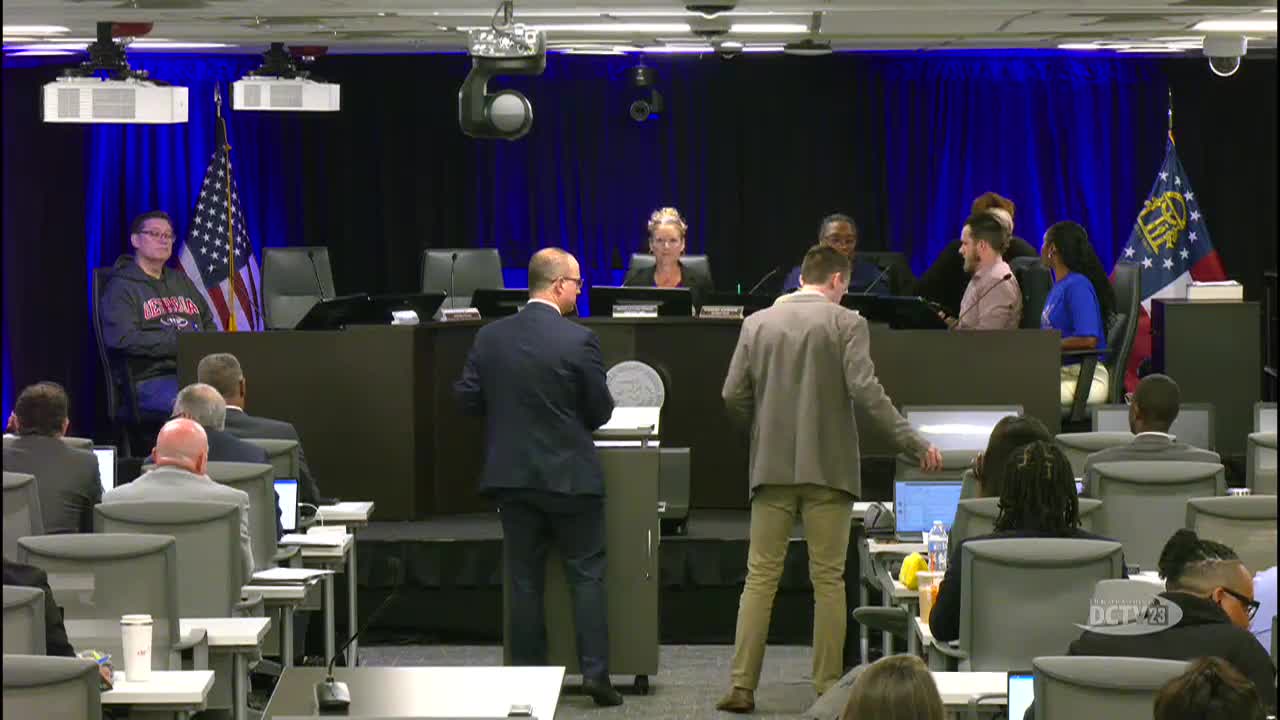
Summary
Marathon Health presented utilization, patient satisfaction and early cost‑savings indicators for the county employee clinic; commissioners asked about capacity, eligibility and specialist referrals.
Marathon Health representatives told the DeKalb County Board of Commissioners during the Committee of the Whole meeting on Aug. 28 that the company’s employee health center is serving county staff and their families and is showing early signs of steady utilization and patient satisfaction.
The presentation, led by Larry Morsey, vice president of government affairs at Marathon Health, and Micah Mujan, Marathon’s client success manager for DeKalb County, said the clinic served roughly 500 unique active county patients over the past 12 months and delivered more than 1,000 appointments, an average of about 2.3 visits per patient. The presenters said the clinic’s average visit length is about 35 minutes, with initial visits typically lasting about an hour, and reported a Net Promoter Score of 93 from patient experience surveys.
The county’s presiding officer, Commissioner Michelle Long Spears, introduced the presentation and asked clarifying questions about eligibility and enrollment. Marathon stated the clinic currently serves employees and families enrolled in the county’s Anthem Blue Cross plan; the company said Kaiser Permanente enrollees are not included under the existing agreement. “This is a service directly for the employers that hire us, in this case, the county,” Morsey said.
Why it matters: county health benefits are a sizable operating cost for local government budgets. Marathon said its model aims to reduce downstream costs — fewer emergency‑room visits, fewer unnecessary specialist referrals — by providing longer primary‑care visits and care coordination. Morsey cited a prior municipal partnership in Rockford, Illinois, where Marathon reported $50 million in savings over 10 years compared with prior cost trends.
Details and discussion: commissioners pressed Marathon on uptake, capacity and how referrals are handled. - Utilization: Marathon said about 18 percent of eligible employees use the clinic; among employees with identified high or chronic risk conditions, about 29 percent were engaged with the clinic. The presenters said utilization tends to grow over time and that DeKalb’s engagement numbers are within expectations for a public‑sector program under two years old. - Capacity: Marathon said the on‑site provider (named in the presentation as Diane) has room to see more patients now; provider utilization is monitored and the vendor typically discusses adding staff when a provider’s schedule reaches roughly 75–85 percent utilization. - Outreach: the company described outreach strategies — flu shot drives and on‑site events in disparate county workplaces — to raise awareness among employees in physically distributed worksites. - Specialist referrals and care coordination: Marathon described an internal e‑consult program called Rubicon MD that allows primary‑care clinicians to get specialist input within 24 hours. Marathon said the program lowers referral rates and helps ensure referrals, when needed, are to in‑network, high‑quality specialists. “We first check to see who’s in network,” Morsey said.
Limitations: Marathon said a full claims‑based return‑on‑investment analysis for DeKalb will come later, after more time in the contract; current savings cited were from other municipal clients. The company also confirmed the clinic accepts Anthem plan members only under the present agreement; expanding eligibility to Kaiser enrollees would require additional operational work and possible contract changes.
Next steps: commissioners asked Marathon to continue reporting utilization and outcomes and to return with proposals if the county reaches capacity (additional staff or new locations), or if the board wants the clinic opened to other insurer groups. Marathon said it is exploring strategic options across the Atlanta metropolitan area and can return with proposals.
The presentation closed with commissioners and staff thanking Marathon for the briefing and asking for the slide deck to be circulated to the board.