
Council debate on youth homelessness prioritization fails after close vote
Get AI-powered insights, summaries, and transcripts
Sign Up Free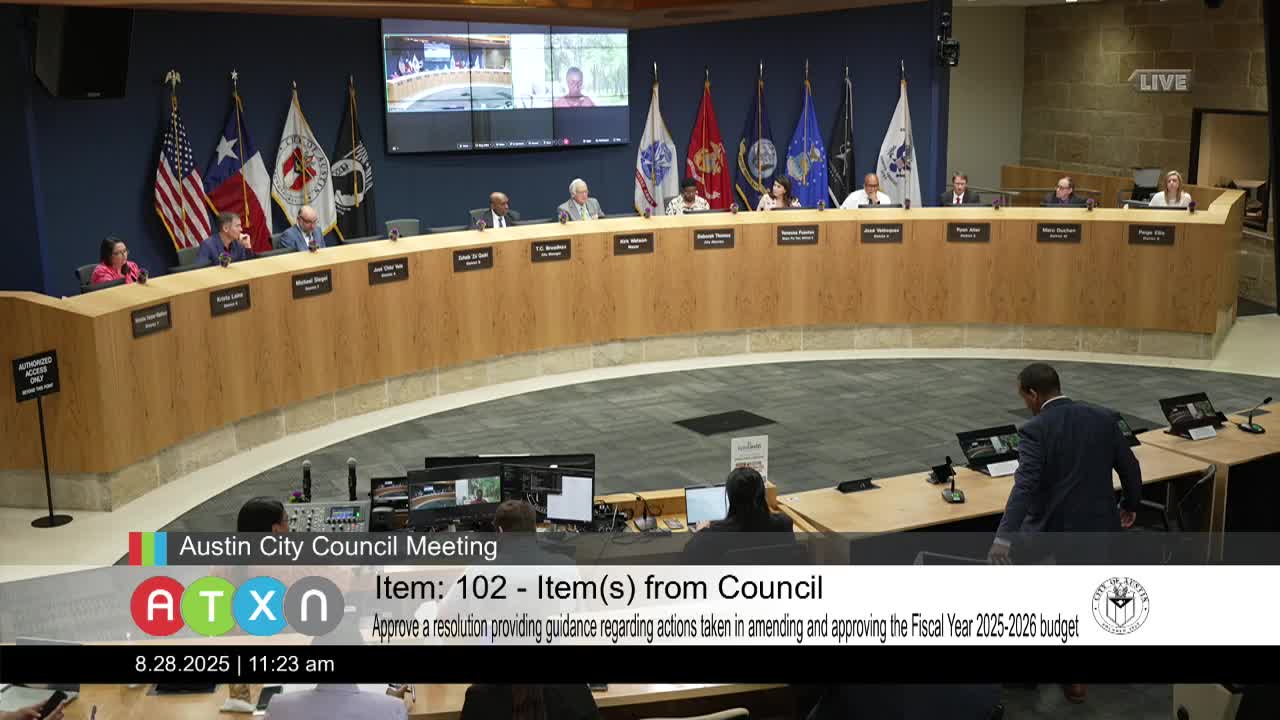
Summary
A proposed council direction to target a representative 15% of homelessness funding toward youth was debated and failed after a roll-call vote; staff warned a fixed floor could limit data‑driven flexibility and emergency response.
A council proposal to direct city homeless‑strategy funding to target a "representative proportion" of resources for youth — identified in the draft language as 15 percent — drew extended debate and failed on a divided vote on Aug. 28.
What the measure would have done: The resolution (Item 102) asked the city manager and homeless strategy staff to prioritize youth homelessness and to target allocating at least a representative proportion (cited in the draft as 15%) of relevant funding to youth services. Councilmember Ryan Alter introduced the item as a follow‑up to budget discussions and said the intent was to ensure young people receive resources commensurate with their share of the homeless population.
Staff concerns and arguments: David Gray, the city’s Homeless Strategy Officer, told council his office prioritizes data‑driven decision‑making and warned that a fixed allocation floor would reduce the office’s flexibility to respond to changing needs across other subpopulations. "When we start taking slices of the pie for certain subpopulations, it limits our ability to be nimble and flexible for the other folks who are experiencing homelessness," Gray said. He added that a hard floor could mean the office would not exceed that floor even if data later suggested more investment in youth was needed.
Support and public comment: Councilmember Alter and several council members said the measure sought to rectify large increases in youth homelessness that providers have documented. A public speaker, Savannah Lee of Equity Action, urged that any non‑sworn response pilot be funded from existing public‑safety allocations and not require additional tax dollars.
Vote and outcome: Alter moved adoption; Councilmember Jose Velasquez seconded. The roll call recorded five votes in favor (Alter, Velasquez, Mayor Pro Tem Vanessa Fuentes, Councilmember Siegel, and Lane); three votes against (Councilmembers Duchin, Vela and Mayor Kirk Watson); and two abstentions (Councilmembers Ellis and Harper Madison). Councilmember Kadri was absent. The motion did not pass.
Why it matters: Council considered the item as a targeted policy directive toward a high‑growth homeless subpopulation; staff argued the approach would constrain the city’s ability to allocate funds flexibly in emergencies and could pit provider groups against each other. Supporters described the resolution as a means to ensure youth receive services proportionate to their representation among people experiencing homelessness.
Ending: The council did not adopt the proposal. Councilmembers and staff signaled a desire to continue coordinating on youth homelessness through the Homeless Strategy Office and the budgets already adopted earlier in August.