
EDA proposes annual enterprise‑zone boundary changes; committee forwards amendment for council review
Get AI-powered insights, summaries, and transcripts
Sign Up Free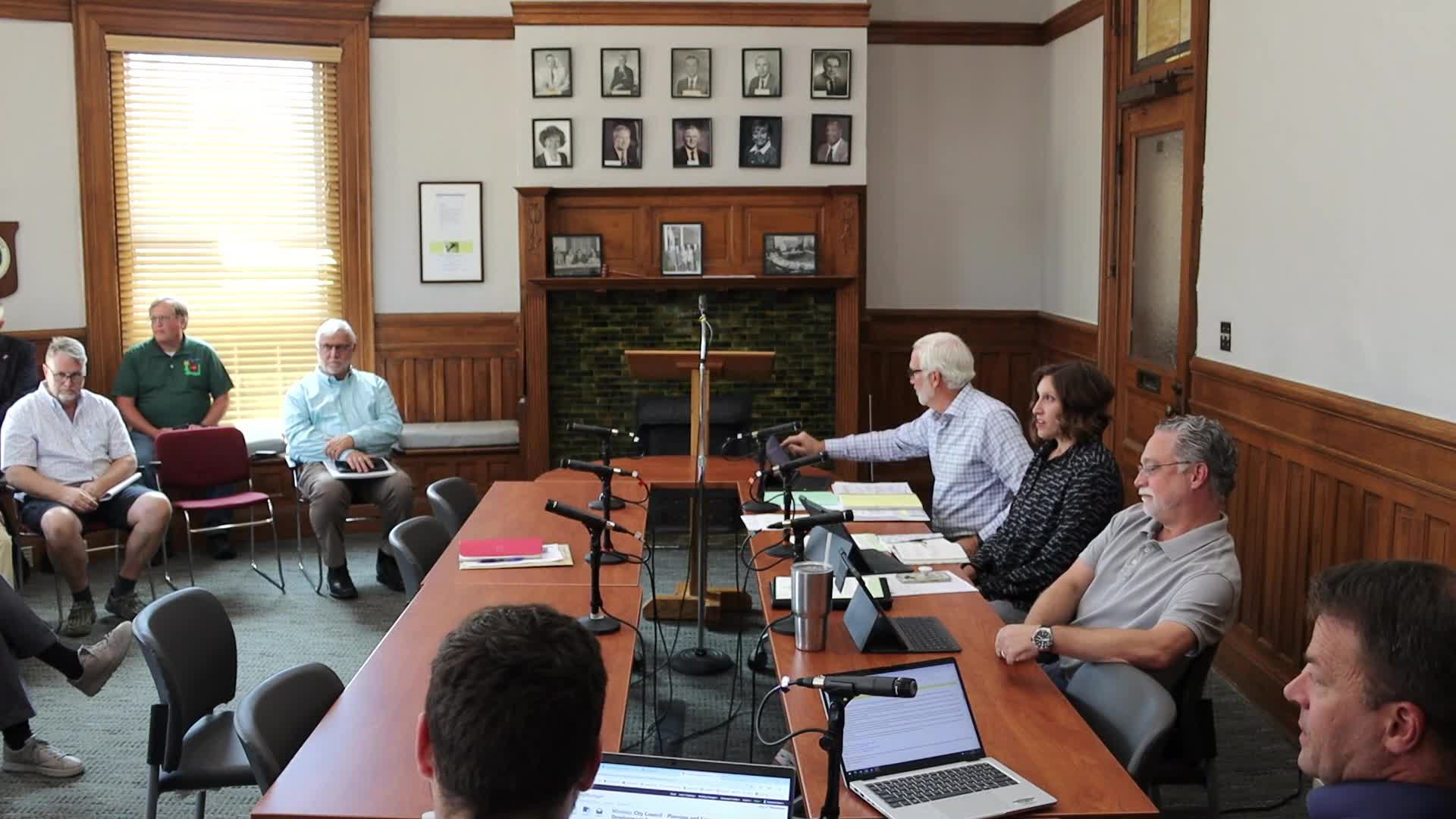
Summary
The Winchester Economic Development Authority presented requested annual boundary adjustments to the city's enterprise zone. The PED Committee voted to forward the resolution with a recommendation for approval; the item will go to council for public hearings starting Sept. 23.
Sam Iden of the Winchester Economic Development Authority presented the city’s annual enterprise zone boundary amendments to the Planning & Economic Development Committee on Aug. 28, and the committee voted to forward the resolution with a recommendation for approval.
The enterprise zone program is a state‑city partnership administered by the Virginia Department of Housing and Community Development (DHCD) and the Winchester EDA. Iden said DHCD preliminarily approved the proposed adjustments Aug. 14, and the EDA approved them Aug. 19. If the city council approves the resolution, two council hearings will follow, including a public hearing scheduled for Sept. 23; a final application to DHCD is due Nov. 1.
Key details: State rules allow up to two noncontiguous enterprise zones with a combined maximum of 640 acres. Winchester currently uses about 625.5 acres and the proposed changes would result in roughly 614.3 acres if approved. The packet shows deletions — for example, roughly 11.13 acres removed from the northern zone that include city administrative buildings and single‑family properties — and additions intended to better align the enterprise zone with proposed Neighborhood Design District boundaries and to include parcels requested by business owners (examples: a proposed hotel off Crossover Boulevard and a commissary kitchen at 1581 Commerce Street that recently received a state AFID grant).
Questions from committee members included whether The T Spot childcare operation was included (Iden said it likely remains included but staff would confirm) and how the program treats mixed‑use projects; staff noted incentives generally focus on property rehabilitation and commercial redevelopment rather than purely residential projects.
Committee action: A motion to forward the resolution with a recommendation for approval passed unanimously in committee and will go to city council with the EDA’s proposed additions and deletions.
Ending: If council approves the amendment out of PED, the city’s application will be submitted to DHCD by Nov. 1 for final approval and continuation of the enterprise zone incentives and state grant eligibility.