Get Full Government Meeting Transcripts, Videos, & Alerts Forever!
Get email alerts on the Occupancy Tax Allocation topic
No spam. Unsubscribe anytime.
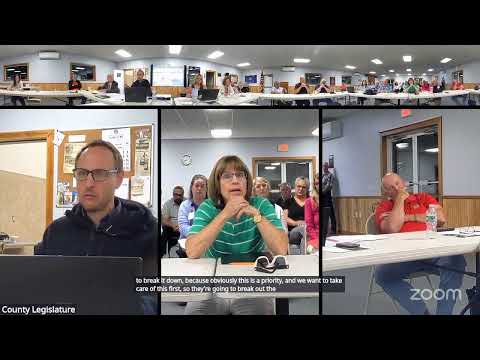
Cayuga County proposal to reallocate occupancy-tax revenue fails after hours of public comment
Summary
A proposed local law to change distribution of Cayuga County's occupancy-tax revenue was rejected by the Cayuga County Legislature on Aug. 27, 2025, after extensive public testimony from business owners and tourism officials.
A proposed local law to change how Cayuga County distributes occupancy-tax revenue was rejected by the Cayuga County Legislature on Aug. 27, 2025, after lengthy public comment from tourism officials, local businesses and chambers of commerce.
The measure would have diverted 20% of the county's occupancy-tax (hotel and short-term rental) receipts from the county's designated tourism entity to county purposes, including capital projects. Supporters of the tourism office and dozens of local business representatives urged the legislature to keep funding levels unchanged.
Noah Howard, public relations manager for the Cayuga County Office of Tourism, told the legislature: "Tourism in Cayuga County is not just a promotional effort. It's an engine of economic growth, job creation, and community pride." Howard said visitors spent nearly $160 million in the county in 2024 and that tourism produced about $9.9 million in local sales-tax revenue that year.
Erin Katzker, managing director of Rev Theater Company and chair of the Tour Cayuga board, said the county's work to market lakes, farms and history "is not just an expense. It is a smart investment in our economy and our future." Springside Inn owner Sean Landmore and several chamber and downtown business representatives told the legislature cuts to the tourism office would directly reduce visitor marketing and harm lodging, restaurants and small retailers.
During debate, a legislator moved to cut the proposed county draw from 20% to 10%; that amendment failed. Lawmakers did approve an amendment changing where any county share would be used: rather than a broad list of county purposes, the amendment would require that the county portion be deposited into a Parks capital reserve and used for park capital projects. After further discussion and a roll-call, the overall local-law change (as amended) failed.
Legislators who spoke in favor of redirecting a portion of the occupancy-tax revenue said the county faces fiscal pressures and that modest county reinvestment in parks and infrastructure could leverage outside tourism dollars. Opponents said even a small reduction would undercut a self-sustaining tourism program that local businesses depend on.
The public comment portion of the meeting featured more than a dozen speakers representing the county tourism office, local chambers of commerce, wineries, inns and performing-arts organizations. Many cited the tourism office's roughly $1 million annual budget and the Office's reported return-on-investment figures.
The local law under consideration was introduced as a change to the county's occupancy-tax ordinance, described at the hearing as being "pursuant to chapter 5 33 of the laws of 1994 of the state of New York." The legislature will retain its current budgetary authority to revisit allocations but took no change to the law this session.
The measure drew sustained public opposition and failed on the floor; proponents said they will continue to press for county capital funding options that do not reduce the tourism office's operating allocation.