Raftelis study recommends higher water, wastewater and stormwater revenue; staff to return with final rates in October
Loading...
Summary
A Raftelis rate study presented Aug. 26 showed Lafayette faces sizable capital and inflationary pressures for utilities, proposed smoothing to raise about $2.9 million in additional water revenue in 2026, and recommended updated tap fees; staff will return in October with final numbers.
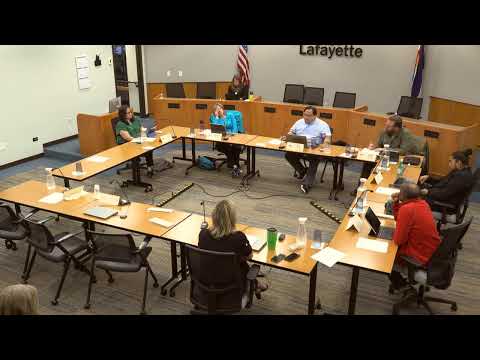
Raftelis Financial Consultants and Lafayette public‑works staff told council Aug. 26 that the city’s water, wastewater and stormwater utilities face rising repair, replacement and borrowing costs, and that a combination of rate increases and reserve management will be required to fund planned capital work.
Todd Cristiano of Raftelis summarized the financial plan and recommended adjustments. For the water utility Cristiano presented a preliminary plan that draws on reserves and seeks additional annual rate revenue — "we're looking to get an additional $2,900,000 from an annual revenue increase," he said — to smooth funding for capital repair and replacement and to meet required reserve and debt coverage targets. The firm’s analysis showed similar, though smaller, adjustments for wastewater and a modest revenue increase for stormwater; Raftelis said staff will return with sharpened numbers in October.
Jeff Arthur, the city’s public works director, highlighted large cost escalations tied to facility projects. He said earlier engineering estimates for a new water treatment facility had grown dramatically: "our engineer at the time in 2019, estimated that to be about $5,000,000 ... the work we had done last year with a new consultant, put that somewhere in the $150,000,000 range," Arthur said. Staff told council that higher interest‑rate environments and regionwide project costs (including Northern Water partner projects) increase the city’s borrowing cost and the long‑term cost of major capital projects.
Tap fees and rate design
Raftelis recommended updating tap fees (impact fees) to reflect current construction and capacity costs. The presentation showed a modest wastewater tap‑fee increase (preliminary wastewater tap fee approximately $6,530) and a substantial, supportable increase in the water tap fee based on updated capital project costs; staff said the city could adopt the maximum supportable fee or phase increases over time. Raftelis also advised keeping the existing rate structure broadly intact while considering minor adjustments to tier thresholds to preserve lifeline usage levels and promote proportionality by charging higher marginal rates for heavy outdoor users.
Risks and regional factors
Staff and consultants emphasized three risk factors: construction‑cost inflation and rising interest rates; legal and permitting uncertainty for regional water supply projects (for example, the Northern Integrated Supply Project, NISP, which staff said has had regional litigation and settlement costs that affect partners); and the operational challenge of balancing winter indoor demand with large seasonal peaks. Raftelis noted that stormwater repair and replacement needs will require a multi‑year ramp up in spending to reach a sustainable level of service.
Impact to customers and next steps
Using example bills from the study, Raftelis showed a typical residential combined water/wastewater/stormwater bill rising by roughly double‑digit percentages under the preliminary plan (staff characterized the combined change as roughly a 12% effect on a sample monthly bill depending on usage). Cristiano said the study seeks to minimize sudden spikes by combining reserve use with rate adjustments. Staff will return with final rate and fee proposals at the October meetings and recommended periodic (every five years) full reviews of tap fees with annual indexing in between to reflect construction cost inflation.
Why it matters: Lafayette must fund aging infrastructure and large treatment and supply projects that have risen in estimated cost; the study proposes a mix of reserves and rate revenue to fund work while smoothing impacts to ratepayers.
What’s next: staff and Raftelis will present final proposed rates, rate schedules and updated tap fees in October for council consideration.