Get Full Government Meeting Transcripts, Videos, & Alerts Forever!
Get email alerts on the 2026 Budget topic
No spam. Unsubscribe anytime.
Lafayette introduces cautious 2026 budget; proposes 9% interim planning fee increase and targeted capital spending
Summary
City Manager Dolan and staff presented a 2026 budget introduction Aug. 26 that projects modest revenue growth, recommends a 9% interim increase to planning and building fees, and prioritizes maintenance and selected capital investments while holding new ongoing positions to a minimum.
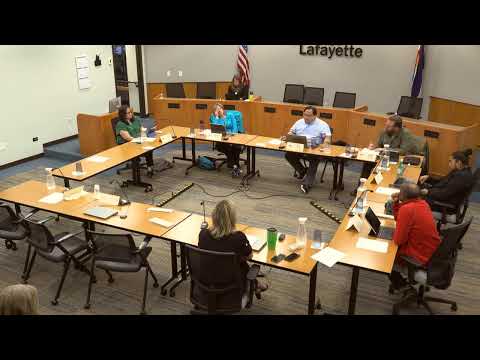
City Manager Dolan and budget staff presented an introductory 2026 budget to the Lafayette City Council at an Aug. 26 workshop, describing a fiscally conservative plan that blends modest revenue growth with targeted spending on capital maintenance and a small set of staff and technology investments.
Dolan said the draft budget was “fiscally conservative given a lot of the uncertainties” and outlined a calendar leading to adoption: staff will deliver a budget book to council by Sept. 20, hold public hearings in October and return for first reading Oct. 14 and final adoption Oct. 28. Finance staff emphasized that the municipal charter requires the city manager to submit a balanced budget and the council to adopt it.
Revenue assumptions and fee proposals
Staff presented projections showing moderate revenue growth: sales and use tax is projected to grow roughly 2% in 2026 (staff noted King Soopers’ prior revenue‑sharing incentive reduced 2025 collections but returns to full share in 2026); property tax preliminary assessed values supplied by Boulder County indicated about 4% growth for 2025 preliminary values, which staff said remains below recent assessed‑value surges; and use tax was described as volatile and treated conservatively for ongoing budgeting. City staff said that, of every dollar collected in sales tax, the city retains about 44¢ — roughly 34¢ to the general fund and the remainder to legacy, parks/open space, public safety and mental‑health funds.
Staff proposed interim adjustments to fees ahead of a comprehensive study: planning and building fees would see a 9% increase in 2026 as a stopgap to reflect rising costs since the fees were last updated in 2019, with a full fee study and ordinance to centralize the fee schedule to follow. Recreation fees and other community‑service charges are expected to grow: staff projected an 11% year‑over‑year increase in revenue for community services in 2025 and recommended a 3% default projection pending the outcome of the fee study.
Expenditures, positions and capital priorities
Dolan and budget staff said they found about $1 million in general‑fund reallocations to absorb some inflationary pressures and that most ongoing position growth would be limited. The draft budget includes several specific personnel proposals: a grant‑funded sustainability/planning position to support a DRCOG (Denver Regional Council of Governments) subaward for climate pollution reduction policy work (if the grant is awarded, the position would be grant‑funded and not added to the general fund); reclassifying a part‑time court clerk to full‑time (bringing total court FTE to three to address rising caseload and complexity); and a part‑time open‑space programming and outreach position funded from dedicated open‑space funds to support volunteer management and trail outreach.
On operating and capital, staff recommended shifting emphasis to rehabilitative maintenance — doubling the street maintenance budget for 2026 and adding a new transportation safety improvements line — and investing in targeted facility and technology upgrades such as library RFID, a court case‑management modernization to move toward paperless operations (staff said a grant is being pursued), and incremental repairs on aging fire and city facilities. Staff also noted a placeholder for possible facility repairs tied to a proposed capital bond; if the bond does not pass some high‑priority repairs could be revisited for supplemental funding.
Funds and follow‑ups
Staff explained that open‑space operating costs were moved into the legacy fund in 2025 and that the parks/open‑space fund had been subsidizing operations; staff said they will bring a midyear supplemental to help stabilize the post fund and better reflect true costs. On benefits and compensation, staff projected a merit program averaging 3% citywide, with a tentative 4% police wage increase already captured in the police CBA placeholder and a health‑benefits placeholder reflecting an estimated more than 10% increase in premiums.
Why it matters: The introduction sets a conservative revenue forecast and prioritizes maintenance and risk reduction while funding a small number of targeted positions and capital items. Staff will return with a final budget book in September and public hearings in October for formal adoption.
What’s next: staff will publish the budget book no later than Sept. 20, hold public hearings in October and return for first and second readings on Oct. 14 and Oct. 28, respectively.