Get Full Government Meeting Transcripts, Videos, & Alerts Forever!
Get email alerts on the Housing Development topic
No spam. Unsubscribe anytime.
Block Island housing board details fall work, financing options for O’Brien development
Summary
The Block Island Housing Board reviewed fall construction plans for the O’Brien affordable housing site, discussed extending grant timelines, debated unit configurations, and directed staff to pursue updated bids and preliminary bank financing.
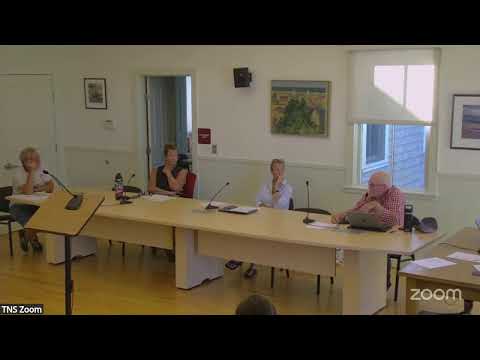
The Block Island Housing Board on Aug. 26 discussed plans to resume fall site work, options to close a financing gap and next steps for the O’Brien affordable housing development in New Shoreham.
Board chair (name not specified) told members the board approved a contractor to run sewer, electrical and water onto the site and that fall work is being coordinated with engineers and contractors to avoid a repeat of spring delays. The board also reported an infrastructure bank grant extension through March 31, 2026, giving the project more time to use remaining funds.
Why this matters: The O’Brien project is the board’s largest current effort to add permanently affordable housing on Block Island. Decisions the board makes soon — including unit mix, whether to sell or rent units, and whether to seek bank financing to build all units at once — will shape the project timeline and cash needs.
Board members discussed several site- and construction-level items. They reviewed options for retention ponds or rain gardens and noted that roadway definition and utility roads will be placed this fall; utilities will be brought onto the site but not distributed within it until later phases. The board also reviewed a stone wall recently completed on site and agreed that photos and signage could support donation outreach.
Unit design and market approach were central topics. The architects proposed converting two adjacent two-bedroom layouts into alternating two- and three-bedroom units by shifting an internal wall. Board members agreed the idea merits further study and that the community forum on Sept. 13 is an appropriate venue to collect public input on demand for rentals versus homes for sale. The board said it must have budget estimates available before asking the public to weigh in on sale prices or rental rates.
On procurement, the board agreed to reissue or refresh a request for proposals (RFP) to current and newly identified bidders with a relatively quick turnaround, and to accept alternative approaches, including both modular and stick-built offers, so long as proposals meet the site’s required footprint. The board asked staff to invite previously interested modular bidders to update their proposals and to send the revised RFP to additional modular and stick-built contractors who have shown interest.
Financing to close the project gap was discussed at length. Several board members said outside lenders and experienced partners had advised against phasing the project (build-sell-build) because banks and funding partners typically prefer a clear plan for the full project. The board directed staff to begin initial, preliminary discussions with banks to explore financing that would cover construction for all buildings at once. Rob Grant (consultant referenced in the meeting) was identified as assisting with preliminary numbers. Board members noted that selling all units at market-close might enable the board to retire construction debt, but they also discussed keeping one or more units as rentals owned by public entities to preserve affordable inventory.
The board reviewed potential funding sources and grant opportunities. Members discussed pursuing a turnkey grant program (referenced in the meeting) that was described as worth roughly $50,000 per unit in prior conversations and confirmed plans to pursue a separate Wells Fargo grant that the board estimated at about $13,900 per unit if awarded. The board also referenced existing commitments from the Rusa Foundation (energy-efficiency and solar support) and said they would coordinate grant uses so that efficiency measures and solar installations complement other funding.
Next steps and meeting schedule: The board agreed to concentrate the next meeting(s) on finalizing choices about sales vs. rentals, unit-bedroom configuration and whether to seek construction financing; members aimed to resolve those issues within two to three meetings, targeting a substantive meeting in October. The board also asked staff to prepare materials for the Sept. 13 public forum, including large-format layout drawings and a one-page handout summarizing the project. The board did not take a formal financing vote; it authorized staff to initiate exploratory conversations with banks and to circulate updated RFP documents to bidders.
Provenance: This article summarizes discussion that began when the board introduced "Item number 7, the O'Brien affordable housing development" (transcript start ~s=1344.965) and continued through board wrap-up of financing and grant items (transcript end of O'Brien discussion ~s=3888.12).
Ending: The board set an agenda-driven schedule: public outreach at a Sept. 13 forum, more detailed internal discussion in October, and a goal of finalizing build/sell/rent decisions soon so staff can pursue bank financing and updated construction bids.