Get Full Government Meeting Transcripts, Videos, & Alerts Forever!
Get email alerts on the Rpp2 Repower topic
No spam. Unsubscribe anytime.
Roseville to repower RPP‑2 with state-provided units, raising capacity to 67 MW
Summary
City staff briefed the commission on a project to replace aging equipment at the RPP‑2 generation site; the work uses units supplied by the state, increases capacity from about 48 MW to 67 MW, carries an estimated total project cost near $45 million and is scheduled for on-site work starting in October with commissioning targeted for June.
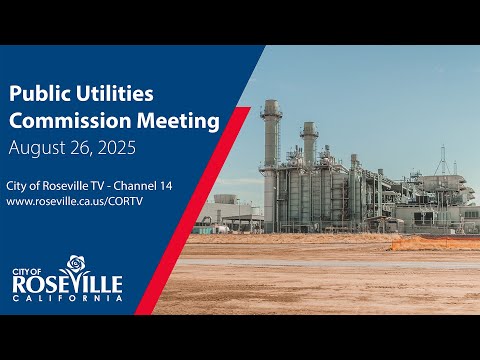
Roseville staff told the Public Utilities Commission on Aug. 26 that the city will repower its RPP‑2 generating site with newer turbine units supplied by the California Department of Water Resources, increasing capacity and modernizing end‑of‑life equipment.
"We are increasing the capacity from 48 megawatts to 67 and we are then able to redirect all that capital that was going into maintenance into newer infrastructure," said OJ Carulli, principal power engineer. Carulli said the state packaged two replacement generators that were at Yuba City and, under a time‑sensitive agreement, will deliver them to Roseville for installation. Roseville will manage decommissioning of existing units and installation of the new units and equipment.
Key project terms disclosed to the commission include a roughly five‑year contract term through November 2029, after which Roseville will take ownership of the units (staff expects a buyout price of $9 million in 2029). The project’s capital budget figures presented were approximately $33 million for the primary EPC (engineering, procurement and construction) contractor, $5.9 million for switchyard work and compressors, and about $4.1 million for internal labor and owner's engineering—totaling about $43.0 million before contingency and about $45.0 million including a 5% contingency. Staff said the state is contributing $8 million toward the site work.
Carulli described operational and regulatory benefits: the new turbines are identical to recently installed peak units, which simplifies spare parts and operations; they are faster to start, more efficient, and have emission controls (selective catalytic reduction) reducing pollutants compared with the existing machines. The project also includes a 60 kV switchyard rebuild and provisions for a second distribution line to improve reliability.
The construction schedule presented to the commission calls for site preparation in September, taking down the old units around Oct. 1 and civil works through January, equipment delivery in January, installation through April and testing in May with dispatch availability targeted for June 1. Carulli said the city has ordered long‑lead items and is about 90% through design.
Carulli said staff secured CEQA relief for the work under existing categorical exemptions applicable to reconstruction and environmental protection (Class 2 and Class 8) and that the project's increase in capacity is modest relative to the city’s overall system and does not trigger the California Energy Commission (CEC) jurisdictional review that would lengthen permitting timelines. He said the project team is coordinating with the Placer County Air Pollution Control District on air permitting and that emissions controls on the new units reduce the likelihood of triggering major‑source permitting thresholds.
There was no action required; the briefing was informational. Commissioners asked about hour limits and air permits for the new units; staff said there will continue to be annual run‑hour caps tied to air‑quality and permitting limits but that the new units are expected to produce more megawatt‑hours while emitting fewer pollutants per megawatt.
The city expects to fund the work via available cash or bonds; staff said they are evaluating bond financing as one option.