Get Full Government Meeting Transcripts, Videos, & Alerts Forever!
Get email alerts on the Education School Start Times topic
No spam. Unsubscribe anytime.
Experts, educators urge later school start times to address teen sleep crisis
Summary
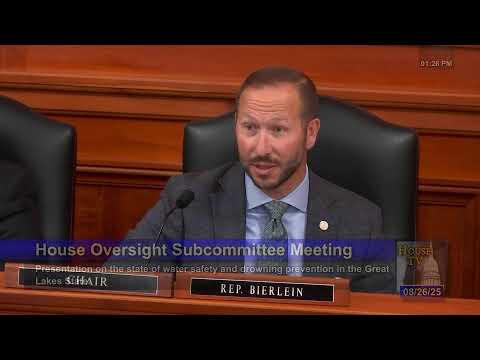
Representatives of Start School Later and local school officials told the House Oversight Subcommittee on Public Health and Food Security that shifting middle- and high-school start times later would improve students’ health, safety and academic performance.
Representatives of Start School Later and local school officials told the House Oversight Subcommittee on Public Health and Food Security that shifting middle- and high-school start times later would improve students’ health, safety and academic performance.
Dr. Hannah Hoffman, an MSU faculty researcher representing Start School Later, told the committee that adolescents need 8 to 10 hours of sleep and that ‘‘less than 7 hours is kind of critical. It’s…a real medical emergency that these kids get this additional sleep in order to function.’’ She described biological changes in puberty that delay melatonin release and push teenagers’ natural sleep windows later.
The presenters said insufficient sleep is linked to poorer memory consolidation, higher risks of risk-taking behaviors including weapon carrying, substance use and impaired driving, and increased rates of depression, anxiety and suicidal thoughts. They cited studies and reports — including a nationwide RAND analysis and researcher work tied to a ‘‘Hamilton’’ report — that suggest later start times improve attendance and graduation rates and could have statewide economic benefits.
Start School Later asked state lawmakers to consider declaring teen sleep deprivation a public-health emergency, to convene a task force with superintendents and education stakeholders, and to fund pilot programs and transportation-consultant support for districts that want to shift start times. The presenters said some large districts have changed start times without additional cost and pointed to examples in California and other states.
Katie Kavanaugh, a member of the Okemos Public Schools board of education, told the committee her district convened a committee including teachers, principals, parents and administrators and found the issue ‘‘super complex’’ but worth pursuing. She said staffing, contracts and transportation logistics — including inter-district athletic scheduling governed by the Michigan High School Athletic Association — are major hurdles and recommended state pilot funding and coordinated regional efforts.
Committee members pressed presenters on practical concerns: transportation for rural districts, childcare for families where teens care for younger siblings, impacts on after-school jobs and how tiered busing and instructional-hour requirements affect schedule options. Presenters said research shows some childcare burdens fall away when start times change and that many districts can mitigate costs with route compression or other local solutions. They also noted variation across districts and suggested exemptions or phased approaches for rural areas.
Representatives from Start School Later recommended policy options including no school start before 8 a.m. for middle and high schools, expanded sleep education for students and parents, and creation of resources to help districts design schedules that preserve instructional minutes. Board members and presenters emphasized including teachers early in bargaining and planning, and suggested the state provide stable, recurring funds to support transportation and pilot programs.
The committee did not take formal action during the hearing. Members and witnesses said they expect more testimony and technical detail from transportation and education finance experts before any legislative proposal would be introduced.
Sources: testimony from Start School Later representatives (Hannah Hoffman, Catherine Nitz, Laura Heumann, Dr. Vishal Ciani) and Okemos board member Katie Kavanaugh before the House Oversight Subcommittee on Public Health and Food Security.