Get Full Government Meeting Transcripts, Videos, & Alerts Forever!
Get email alerts on the Municipal Budget topic
No spam. Unsubscribe anytime.
Newton adopts $62.8 million 2026 budget after public hearing; commission votes unanimously on resolution G1364
Summary
After a public hearing with multiple residents raising concerns about property taxes and snow removal, the Newton City Commission unanimously adopted the 2026 city budget and approved resolution G1364, keeping the mill levy consistent while responding to a roughly 4.95% rise in assessed valuation.
The Newton City Commission unanimously adopted the 2026 municipal budget, approving Resolution G1364 after a public hearing in City Commission Chambers on Aug. 26, 2025.
The adopted budget sets total expenditures at $62,775,000, which the city described as including roughly $1.3 million in reserves. City Finance Director Donna explained that the city’s assessed valuation rose from $170,904,698 to $179,374,523, or about 4.95%, and that the revenue-neutral rate provided by the Harvey County Clerk would have reduced the mill levy if the commission had left it unchanged.
Why it matters: The commission’s choice to hold the mill levy largely steady allows Newton to capture revenue tied to the increased valuation. Staff and commissioners said the additional revenue is intended to maintain departmental operations, address wage and benefit increases from a classification and salary study, and preserve the general fund reserve target.
What the hearing covered: Several residents spoke during the public hearing about the local impact of higher property tax bills. Joe Solomon, a longtime Newton resident, urged commissioners to “look at trying to bring the mill levy down some and give it to the taxpayers, at least the seniors,” saying rising property taxes were forcing some older residents to keep working. Sam Rindy and other residents raised neighborhood concerns such as inconsistent snow removal in Quail Creek. Jeff Martinez noted the high local tax burden compared with his prior Colorado residence and asked about tax abatements for businesses.
City response and explanation: Donna, the finance director, walked through the mechanics: assessed valuation increases are driven by the Harvey County appraiser’s adjustments and state guidance, not a unilateral city tax rate increase. City Manager Daniela and other commissioners explained that keeping the mill levy stable is a policy decision tied to planned services and infrastructure; they also outlined economic-development strategies (including selective tax abatements) intended to broaden the tax base over time. A commissioner noted the city has pursued employers such as GAF to increase assessed valuation, but that infrastructure costs for new development also rise.
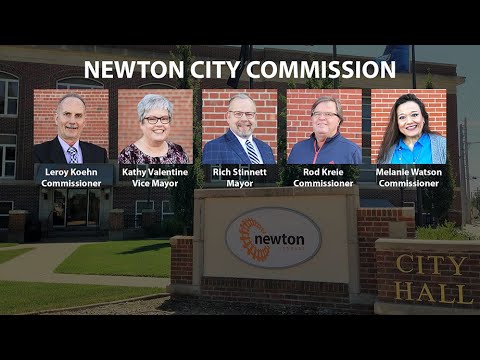
Formal action: The commission voted on Resolution G1364 by roll call. Commissioners Scribe, Valentine, Watson and Kane and Mayor Rich Stinnett voted yes; the vote was unanimous.
Next steps: Staff said they will continue outreach explaining the valuation and mill-levy process and encourage public participation during spring budget workshops, when service-level choices are discussed.
Ending: The budget adoption concludes the statutory public-hearing requirement and sets the spending plan the city will use through 2026. Officials asked residents to bring service-level priorities to the commission during the next budget cycle.