Get Full Government Meeting Transcripts, Videos, & Alerts Forever!
Get email alerts on the Zoning And Regulations topic
No spam. Unsubscribe anytime.
Commissioners weigh scope of zoning and subdivision code rewrites; questions raised on DPR transfer, ADU rules and public notice
Summary
Planning staff introduced draft zoning ordinance updates and subdivision-regulation revisions intended to align the code with recent state law changes. Commissioners and the city solicitor asked staff to mark which edits are legally required, to preserve public-notice protections, and to ensure accessory-dwelling-unit language mirrors state law.
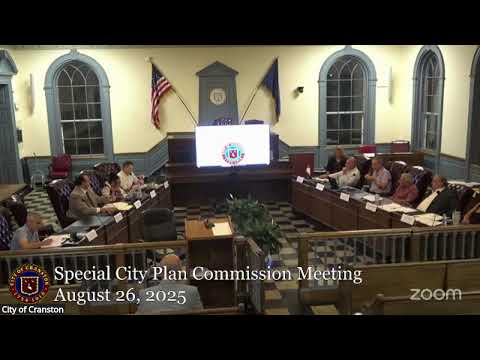
At an Aug. 27 workshop, Cranston planning staff presented a package of draft zoning ordinance changes and companion subdivision-regulation updates intended to bring the city’s land-use code into alignment with recent state law changes and to reduce administrative friction in permit review.
Planning staff described the package as two related workstreams: (1) code edits intended mainly to conform definitions and procedural text to state law and (2) broader revisions to the Development Plan Review (DPR) process and subdivision regulations that reposition large portions of DPR-detail into the subdivision code. Staff said DPR content in the zoning ordinance had been moved “to the subdivision regulations” to follow model practice and state guidance.
Commissioners and the city solicitor flagged several concerns before any formal vote. Commissioner Lamphere and others asked staff to mark, in an accompanying table, which changes are required by state law and which are proposed policy choices. Lamphere asked for explicit citations where state law compels an edit. Several commissioners said they would not support stripping public-notice or public-hearing requirements from the zoning ordinance unless the same protections are retained in the subdivision regulations, noting the public’s accountability to elected officials if notice is located only in a regulation rather than the ordinance.
City Solicitor Marcello and commissioners also urged caution about the scope of transfer. Marcello summarized that some DPR-related changes track state law but that moving or deleting large ordinance sections without clear statutory necessity could create confusion and raise political objections at city council. The director and staff suggested a separate workshop to show how DPR, technical-review committees and subdivision procedures would interact under the draft rules.
Accessory-dwelling units (ADUs) and parking were singled out for detailed review. Staff said ADU provisions in the draft mirror state constraints — size limits tied to lot area, within-envelope placement and the 60% rule for certain calculations — but commissioners asked staff and the city solicitor to confirm that the local draft does not go beyond state law. Commissioners also discussed whether the city could require no more than one parking space for an ADU (state law caps local parking requirements for ADUs); staff said certain limited waivers (for family members, elderly or disabled occupants) were being considered as discretionary exceptions, subject to affidavit and review.
Timing questions: staff told the commission that the comprehensive-plan housing element is the higher priority for immediate submission to statewide review; zoning and subdivision ordinance changes would follow as a second package. The subdivision-regulation changes will require a public hearing; staff indicated the earliest practical hearing date for subdivision regulations would be in October. Several commissioners said they preferred to submit the housing element to the council first and bring zoning/subdivision changes to the council later to avoid overloading the fall agenda.
Public commenters reiterated concerns about process and permitting friction. Developer-commenter Bob Murray described permitting delays for large projects — including a multiyear review for Cranston Printworks — and urged the city to streamline plan review capacity and staff resourcing. The planning director acknowledged the need to reduce procedural friction and cited ongoing efforts to streamline interdepartmental reviews.
Follow-up items included solicitor review of the draft ADU wording, a staff-prepared table flagging changes that state law requires versus optional local policy changes, and a potential separate workshop on the DPR-to-subdivision-regulations transition.