Get Full Government Meeting Transcripts, Videos, & Alerts Forever!
Get email alerts on the Data Centers topic
No spam. Unsubscribe anytime.
Lancaster council directs staff to draft zoning rules for data centers after months of public concern
Summary
Lancaster City Council voted to direct the solicitor and Planning Bureau to draft a zoning ordinance amendment to regulate data centers. The move drew extensive public comment on water use, noise, air emissions and grid impacts and followed updates from the administration about developer commitments and an appeal to the zoning hearing board.
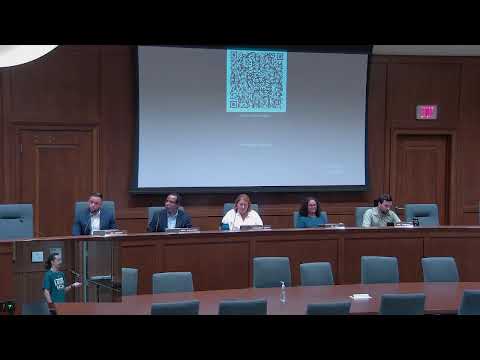
Council President Baker on Aug. 26 asked Lancaster City Council to direct the city solicitor and the Planning Bureau to draft a zoning ordinance amendment to address the land use of data centers, and council voted to approve the request for preparation and review.
"I would like to make a motion that council direct the solicitor and the Planning Bureau to draft a zoning ordinance amendment in accordance with applicable law to legislatively address the land use of data centers to protect the impacts on the community for presentation at the October Committee meeting," Council President Baker said.
The motion, presented as part of the president's report, directs staff to prepare proposed language and requests that the City Planning Commission review the draft and provide recommendations before council considers any readings. Council unanimously approved the direction to staff.
Why it matters: residents and business owners filled the council chamber to press for clearer, enforceable limits on proposed data centers near Lancaster. Speakers raised environmental, health and economic concerns — including potential water and electricity consumption, noise, air emissions, and impacts on electricity rates and long-term grid reliability — and sought reassurance that new rules would reach existing projects where legally possible.
Public comments were focused and sustained. Frank Arcolio, who said he lives on Old Trinity Place, told council that if the ordinance does not apply to projects that already have city approval it would "give me the feeling that you are willing we are are willing to close the barn door long after the horses have escaped." Other speakers urged rapid action and greater transparency from city and state regulators.
Council President Baker also relayed recent administration updates about one developer, identified by the city as Carissa Technology Parks. According to the president's report, the city is arranging a second, independent review of the developer's noise study and will interview an environmental consulting firm to help the city understand how the Pennsylvania Department of Environmental Protection will regulate air emissions and the permits that are in DEP's jurisdiction. Baker said, "Carissa has expressed willingness just this week to codify this in a legally binding community benefits agreement." The president also said the administration has learned Carissa will not use a cooling system that "relies on huge volumes of water."
Baker noted the city lacks authority over utility permitting and that the city is relying on information provided by PPL regarding grid impacts and electricity rates. She also said an appeal filed by a member of the public to the Zoning Hearing Board has been scheduled for Sept. 22.
Residents and small-business owners told council they want the city to press state regulators and legislators as well. At the meeting Councilor Arroyo urged constituents to pursue state-level remedies and referenced pending state legislation intended to ensure data centers bear the direct cost of their energy consumption instead of shifting those costs to residential ratepayers.
What the action is: The council's vote directs staff to draft a zoning amendment and submit it for Planning Commission review and public hearings; it does not adopt a final ordinance. Council President Baker said the draft will be taken up in committee in October and will follow the formal readings and public hearing process required under the municipality's planning code.
Next steps and public input: Councilors and speakers repeatedly said there will be multiple public input opportunities, including Planning Commission meetings and the ordinance reading/hearing schedule. Multiple residents asked the city to make independent study results publicly available and to coordinate with state regulators such as the Pennsylvania Utility Commission and the Pennsylvania Department of Environmental Protection.
The council’s motion is a direction to staff to begin drafting and processing an ordinance, not a final legislative action. The timetable set by council calls for review at an October committee meeting and subsequent ordinance readings and public hearings as required by the city's planning procedures.