Get Full Government Meeting Transcripts, Videos, & Alerts Forever!
Get email alerts on the Public Safety Police Accountability topic
No spam. Unsubscribe anytime.
Residents demand answers after Marcello Woodard’s death; call for body cameras and town hall
Summary
Dozens of Erie residents urged Erie County Council to press for transparency and accountability after the August fatal shooting of Marcello Woodard, asking for a town hall, recusal for one council member and broader use of body cameras for parole officers.
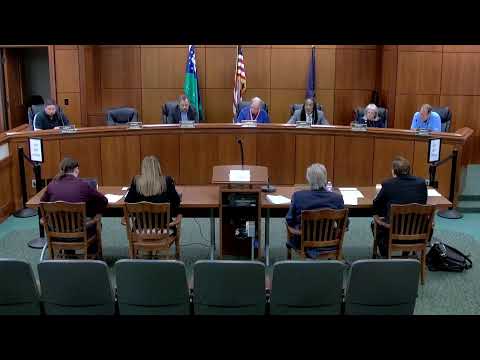
Dozens of residents pressed Erie County Council on Aug. 26 for rapid action and clearer communication after the killing of Marcello Woodard, criticizing local and state officials for what they called silence and inconsistent accountability.
Why it matters: Speakers said the lack of public information about the investigation and the movement of a suspect between counties has deepened community distrust of law enforcement and county government. Several callers connected the case to broader demands for police accountability, including body-worn cameras for parole officers and public forums where officials will answer questions.
Cindy Treiber, a resident, opened the public-comment segment by addressing a council member directly: “I did not vote to hear your feelings, respectfully. I voted for you to speak my voice and to speak my concerns,” she said, and asked that the councilmember recuse himself from any conversations or decisions related to the case. Treiber also said she was concerned that the councilmember’s law-enforcement ties could affect his judgment.
Multiple family members and allies described fear and grief. Michelle Dover Shaw, of the City of Erie, said her high‑functioning autistic son is “terrified to come out of my house because he’s viewed as a black man,” and added: “Marcello was murdered on the streets of Erie and no movement.” Jerry Roberts and other speakers said the suspect remained free and that moving the suspect to Mercer County raised fears the suspect could harm other communities.
Speakers pressed for specific remedies. Constantine Hajotis urged enforcement of a 2023 law requiring parole officers to wear body cameras, saying recorded audio and video “would have picked it up” and helped resolve the case. Chanel, a recent transplant to Erie, cited an allocation she said was tied to HB1278: “In 2023, $1,500,000 was allocated in the budget for parole officers to wear body cameras according to the HB1278,” she said, and asked why the funds and their use were unclear.
Several speakers asked the county to hold a town-hall meeting so officials could answer residents’ questions directly. Cole Shendley, a county resident, urged elected officials to “get with the county executive and the mayor and city council and school board and trying to put on some kind of town hall” to reduce tensions that, he warned, could lead to unrest.
County Council member Horton responded at length during the reports portion of the meeting, saying he had spoken with state and local officials and that council members were pressing for information. Horton noted the county’s limited authority over state prosecutions and said the council lacks full visibility into the criminal investigation’s details: “We'd know about as much as the public, and the silence is deafening to us too,” he told the room. Horton also warned against unscripted public forums that could escalate and offered county human-services resources that might assist grieving family members.
Speakers repeatedly said they had not heard directly from the district attorney’s office or other officials assigned to the investigation. Jared, referencing the Erie County Administrative Code, told the council the code allows special or emergency meetings under certain conditions and asked whether the council could use those provisions to take rapid action; the county solicitor replied that the code’s emergency provisions apply in specified circumstances and cautioned against misinterpretation.
What council did and did not do: The meeting record shows no formal council action on the criminal case, no vote to call an emergency meeting and no formal commitment to a town hall at that session. Council members repeatedly stated they were communicating privately with state and local officials; no public schedule for a town hall or new public briefing was announced on the record.
Community calls for accountability continued after the meeting. Several speakers, including Woodard’s girlfriend, described fear for their safety and asked the council to advocate publicly for the family. Protest organizers in the room said sustained public pressure would continue until they saw prosecutorial or administrative action.
The council’s next regular meeting is scheduled for Sept. 9; members and residents said they would continue to press for clarity about any public forums and for regular updates on possible county resources for the family.