
Legal primer and trustee debate highlight public-comment rules, meeting times and closed-session limits
Get AI-powered insights, summaries, and transcripts
Subscribe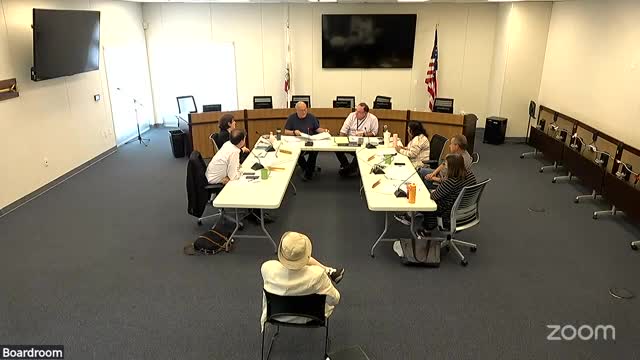
Summary
At a governance workshop legal counsel reviewed Brown Act rules for closed sessions and trustees debated meeting start times, public-comment modalities (remote vs. in-person) and ways to manage lengthy meetings and large numbers of speakers.
Legal counsel reviewed the Brown Act and closed-session confidentiality rules at length during the Aug. 10 governance workshop as trustees debated whether to continue online public comment and how to schedule board meetings.
Why it matters: Trustees wrestled with balancing public access and meeting efficiency. Counsel warned that improperly disclosing closed-session deliberations can have legal consequences, and trustees discussed practical changes to meeting cadence, closed-session placement and public-comment limits.
Counsel's guidance: During the workshop legal counsel summarized which topics properly belong in closed session (personnel appointment/evaluation/discipline, negotiations, student matters and certain litigation items) and cautioned that some closed-session topics require specific notice. Counsel said there is a 'cure and correct' statutory process for some technical Brown Act violations but warned that disclosure of privileged closed-session deliberations can waive protections and expose board members to legal risk.
Public comment and logistics: Trustees weighed the benefits of remote commenting (access for parents and those who cannot attend in person) against the effect of many lengthy online speakers on meeting length. Board President Bill said the district had previously published emailed public comments on the district website so they appear in the public record. Several trustees proposed clearer procedures: limiting total public-comment time when many speakers sign up, asking groups to select spokespersons, and collecting written comments in advance to inform trustee questions.
Meeting cadence: Trustees debated returning to a 6 p.m. start time for public session and scheduling closed session either before or after open session. Several suggested adding more frequent, shorter study sessions or 5 p.m. 'study' meetings where trustees and staff can review materials in depth before action items.
Ending: Trustees asked legal counsel and staff to produce a recommended protocol on remote commenting, public-comment time management and a proposed agenda cadence to present at a future board meeting.