Get Full Government Meeting Transcripts, Videos, & Alerts Forever!
Get email alerts on the County Finance topic
No spam. Unsubscribe anytime.
Scott County Council delays second reading of judgment bond ordinance to Oct. 14 after public comment
Summary
After public comments and questions about financing and timing, the Scott County Council tabled second readings of two bond-related ordinances that would authorize judgment funding bonds tied to a sheriff litigation. The council set Oct. 14 as the next opportunity to consider the measures.
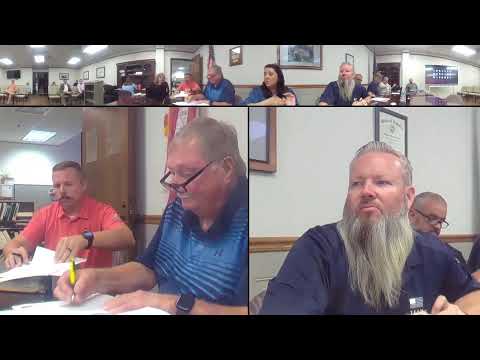
The Scott County Council delayed final action on two bond measures tied to a judgment against the county, voting on Sept. 9 to table the ordinances to the council’s Oct. 14 meeting.
The ordinances under consideration would authorize issuance of judgment funding bonds not to exceed $6,000,000 to cover an “agreed judgment” of $4,490,000 and related costs, including continuing litigation and issuance expenses. Members of the public and several council members raised concerns about timing, rising legal fees and the effect on county reserves and taxes.
The matter began as a public hearing. A resident questioned whether the county should have raised property taxes last year rather than borrow now, saying an emergency bond would “end up costing us double in taxpayer money” and urging the council to take responsibility for last year’s tax-setting decisions. A representative from Baker Tilly, Jason Stenler, was noted by speakers for past cautions on county finances.
In discussion, council members and staff clarified that the instrument advertised is a judgment bond tied to an agreement resulting from litigation with the sheriff, not an emergency bond. Council members and staff explained that the ordinance’s maximum figure was a not-to-exceed limit to allow flexibility for the agreed judgment, continuing legal fees and underwriter and issuance costs. One council member noted additional attorney fees and a potential mediation in October that could increase costs.
Council members also discussed timing constraints. Staff and advisers said a bond would need to be closed by Dec. 31 for levy and budget purposes if the county wanted tax-rate changes reflected in the 2026 budget; staff advised that selling bonds late in December is difficult due to market volatility. Council members said they preferred to finalize budget work before making a final decision on the bond.
After debate, Council member John Collins moved to table consideration of ordinance 2025-48 (the bond ordinance) to Oct. 14; John Miller seconded. The motion carried on a voice vote. Council members then made a separate motion to table ordinance 2025-49 (the related additional-appropriation ordinance) to the same Oct. 14 date; that motion also carried.
The council scheduled a related meeting for Sept. 19 at 9 a.m. for additional appropriations and continued budget work; members noted not all councilors would be available that day and set Oct. 14 as the target date to reconvene for the bond ordinances. Several council members said they are willing to consider a bond if necessary but want final budget figures, updated mediation/legal-cost estimates and Baker Tilly’s updated fund projections before approving debt that could obligate the county for years.
Votes at the meeting included closing the public hearing portion of the bond discussion by voice vote earlier in the evening. No final vote to adopt the bond ordinance was taken; the measures remain on the council’s docket for Oct. 14.
The council’s next regular meeting is scheduled for Oct. 14; the additional-appropriations meeting is set for Sept. 19 at 9 a.m.