Get Full Government Meeting Transcripts, Videos, & Alerts Forever!
Get email alerts on the Wildlife And Habitat Management topic
No spam. Unsubscribe anytime.
Hunt Michigan Collaborative pitches farm‑tour model to grow hunters, reduce crop damage and donate venison
Summary
Brian Farmer, chair of the Hunt Michigan Collaborative, briefed the committee on a nonprofit program that organizes limited, guided hunts on private farms to increase hunting participation, reduce crop damage, support habitat goals and donate excess venison to food banks; early pilots reported sold‑out hunts and donated meat.
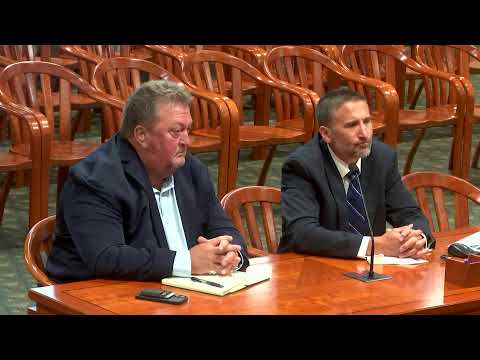
Lansing — Brian Farmer, chair of the Hunt Michigan Collaborative and a parks and recreation official, told the House Committee on Natural Resources and Tourism about a nonprofit program that organizes limited, guided hunts on private farms and in some communities to increase hunter participation, reduce crop damage and donate venison to people in need.
“This could be the change that you’ve been looking for,” Farmer told the committee. He described a model in which participating farmers identify blinds and hunting locations, hunters register (the program charged $100 per slot in pilot events), and volunteer hunt leaders organize safety checks, field‑dressing and transportation of harvested deer. Excess venison is processed and donated to hunger‑relief organizations such as Hunters Feeding Michigan.
Farmer said initial pilots involved two farms and three hunts, with 43 hunters participating; the pilots yielded 25 deer harvested and 13 donated to people in need. He told the committee that, for the current year, four farms were hosting 16 hunts with up to 228 registered hunters and that many events were already sold out. Farmer said the program also promotes archery ranges and youth and women‑only hunts to recruit new hunters and diversify participation.
The presentation emphasized economic and conservation benefits: increased license and equipment sales, more volunteers and stewardship on private lands, habitat improvement, and donations to food banks. Farmer said he has worked with national organizations, manufacturer foundations and archery programs to secure equipment and training and cited a $50,000 private donation to seed the nonprofit effort.
Committee members responded positively and asked about partnerships with the archery industry and scalability. Representative Martin told the group the committee would be available to help reduce barriers. Farmer said the approach is being adopted in communities and that the collaborative aims to expand to dozens of farms and hundreds of hunts in coming seasons.
Ending: Committee members expressed interest in connecting the collaborative with local governments and parks departments; no committee action was required for the nonprofit briefing.