Get Full Government Meeting Transcripts, Videos, & Alerts Forever!
Get email alerts on the Municipal Parking Operations topic
No spam. Unsubscribe anytime.
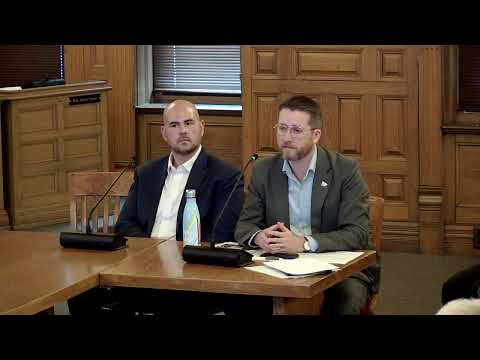
Syracuse officials review proposed LAZ Parking contract, EV chargers and long-term garage strategy
Summary
City staff and LAZ Parking representatives discussed a proposed operator contract for four municipal garages, a $100,000 beautification investment and plans for EV chargers, staffing, security, parking rates and a consultant study to guide long-term garage decisions.
Syracuse City Department of Public Works committee members and city staff discussed a proposed contract with LAZ Parking to operate four municipal parking garages and the broader future of the city’s parking assets.
Chief operations officer Connor Mardoon outlined a plan to enter an operating contract with LAZ Parking that would cover the Washington Street, Fayette Street, Madison Irving and Center Armory garages. The proposal would mirror the prior agreement: a three-year base term with two two-year renewal options; the renewal options would require approval by the Syracuse Common Council.
The contract proposal includes several vendor commitments. The transcript records that LAZ would invest $100,000 of its own funds for entry-level “beautification and landscape” work across the garage portfolio and would manage installation of electric vehicle (EV) chargers at three garages; the estimated value of the EV‑charger work was given as about $25,000. City staff and LAZ representatives discussed limiting the number of chargers to avoid triggering costly upgrades to underlying electrical infrastructure.
LAZ representatives described the local workforce and portfolio operations. Kendi Diaz, LAZ’s area manager, said, “I’ve been with LAZ for 4 years, but I’ve been in the parking industry since 1998,” and that about “90% of our employees are city of Syracuse residents.” Justin Melhard, LAZ’s director of business development, said the company is a national operator with roughly 20,000 employees nationwide and about 1,200 in New York and New Jersey; he said the Syracuse portfolio is staffed by roughly 20 local employees who are cross‑trained across garages.
City staff described proposed EV‑charger counts and where they would be sited. The parties discussed installing chargers at the Washington Street, Fayette Street and Madison Irving garages, with an approximate count of eight chargers at Washington and about four each at Fayette Street and Madison Irving; no chargers were planned at Center Armory during the current proposal. City staff said Center Armory currently presents space and recent investment constraints and that electrical and tax implications (including past utility or grant conditions) could affect near‑term work there.
Safety and security measures were addressed. Pat Monan (who introduced himself during the meeting) described the duress/panic system and said that pressing the panic button “should go out to a call center. They notify the police and the garages themselves, if need be.” LAZ staff and the city said most garages (all except Center Armory) are fully camera‑monitored and that a contracted security team both monitors cameras and walks the garages.
Staff and LAZ also discussed rates and revenue. The transcript shows garage monthly rates have not changed since 2017; sample figures discussed include monthly reserved and regular rates in the roughly $70–$125 range depending on garage and permit type, and staff said the city is “fairly below the market.” LAZ proposed a phased increase (examples cited were in the range of $10–$20 or smaller biennial increments) and suggested automatic periodic adjustments to avoid falling behind market rates.
The committee discussed long‑term strategy for aging garages and broader parking supply. City staff said some garages are approaching the upper end of a typical 50‑year useful life for Northeast concrete structures, and they plan to solicit a consultant to study transportation, real estate and financial implications; staff estimated a consultant study would take roughly six to nine months for data collection and analysis. The city also discussed past asset decisions — including the sale/offload of the AXA garage — as context for whether to continue owning, demolishing, redeveloping or selling certain garages.
Other operational items raised included the city shuttle (the city owns the shuttle, and staff reported an average of about 30 daily users; the shuttle increases usage in inclement weather), potential county or private partnerships to broaden shuttle use, and monthly financial and management reporting: staff said finance receives monthly financial reports and city and LAZ staff are re‑establishing monthly management check‑in meetings and are willing to share the presentation materials with the council.
No formal council vote on the LAZ contract was recorded in the transcript excerpt; staff said contract renewals would require Common Council approval. Committee members suggested next steps: staff to refine the contract terms and scope, proceed with procurement for the consultant study (or consider an existing technical assistance partner), and continue monthly reporting to the council to track operations, revenue and capital needs.
The meeting closed with staff noting the Inner Harbor as an area likely to need significant parking capacity as development proceeds and with continued interest in aligning on‑street, surface‑lot and structured parking policy and funding.