Get Full Government Meeting Transcripts, Videos, & Alerts Forever!
Get email alerts on the Wildlife And Habitat Management topic
No spam. Unsubscribe anytime.
Committee hears bill to limit open‑fields searches by conservation officers; agency opposition voiced
Summary
Representative Jon Preston presented a simplified substitute of House Bill 4073 that would bar the open‑fields doctrine from authorizing searches by conservation officers of the Department of Natural Resources.
Lansing — Representative Jon Preston presented a substitute draft of legislation (referred to in hearing materials as House Bill 4073) that would clarify that the open‑fields doctrine does not apply to searches conducted by conservation officers of the Department of Natural Resources (DNR).
Preston told the House Committee on Natural Resources and Tourism that the earlier draft had prompted public‑safety concerns from the DNR; the simplified substitute aims to “protect private property rights while ensuring conservation officers can fulfill their duties.” He said many constituents in the Upper Peninsula fear unannounced agency presence on private land and that outreach to DNR leadership failed to produce reforms to officers’ practices.
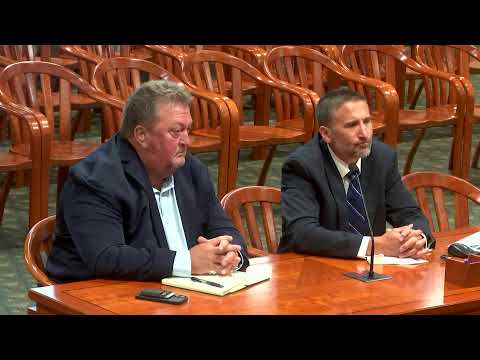
The committee heard opposition from Gregory (Greg) Eagle, president of Michigan Resource Stewards and a retired Michigan conservation officer. Eagle argued the open‑fields doctrine is a long‑standing legal tool used by conservation officers and other agencies to investigate crimes and emergencies, and cautioned that restricting it would “be bad for Michigan and worse for Michigan’s fish and wildlife heritage.” He cited Article IV, Section 52 of the Michigan Constitution — the state’s public‑trust language on natural resources — to argue that conservation duties are a paramount public concern.
Discussion touched on case law and doctrine. Members and witnesses invoked Hester v. United States and the Supreme Court’s open‑fields jurisprudence; Preston and supporters pointed to state constitutional language and decisions in other states that they said interpret state constitutions to protect landowners more broadly than federal precedent. Several legislators asked how the proposed language would work in practice, raised concerns about whether limiting open‑fields searches would hamper criminal investigations or emergency responses, and asked for examples of where current practices had produced public‑safety benefits or harms.
Preston said the substitute includes exigent‑circumstances language so officers can act when there is an imminent threat; he also described numerous constituent complaints about visits by DNR officers that landowners considered intrusive. Eagle and other opponents said conservation officers rely on warrantless investigative authority in many contexts, including searches for lost persons, wildfire detection, and criminal investigations, and cautioned the committee against curtailing enforcement tools without clear alternatives.
Preston told the committee this is not a wholesale attack on officers, but an attempt to address “subjective application” of open‑fields doctrine and to build trust between landowners and agencies. The DNR indicated opposition in written testimony; the hearing included a mix of lawmaker questions and public comment, and committee members signaled a need for further engagement with the agency and legal counsel before any vote.
Ending: The committee did not adopt the substitute or vote on House Bill 4073 at the hearing; Preston said he would remain available for follow up and the committee took no final action.