Get Full Government Meeting Transcripts, Videos, & Alerts Forever!
Get email alerts on the Property Rights topic
No spam. Unsubscribe anytime.
Sponsor: bill would require EGLE to obtain warrant before entering private property
Summary
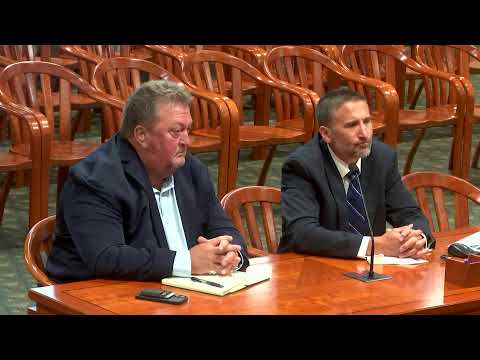
Representative Rob Koontz presented House Bill 4421 to require the Michigan Department of Environment, Great Lakes and Energy (EGLE) to obtain a warrant before entering private property for investigations.
House Committee on Natural Resources and Tourism — Representative Rob Koontz presented House Bill 4421 to require the Michigan Department of Environment, Great Lakes and Energy (EGLE) to obtain a warrant before physically entering private property for investigations.
Koontz said the measure is brief and intended to “enshrine the Fourth Amendment” by requiring EGLE to go “before the judicial branch before they come on private property.” He told the committee that the bill is “two sentences, it’s one paragraph” and that EGLE “can still investigate ... but they have to follow the rules and go before the judicial branch.”
The bill’s sponsor and several legislators framed the proposal as an attempt to rebalance private property rights and administrative inspection powers. Koontz said constituents—farmers and a contractor—had planned to testify but feared reprisal and withdrew; he told the committee those people reported agents entering private land, investigating, and later concluding there was no violation, leaving owners with time and costs but no remedy.
Committee members pressed Koontz on the practical effects. Representative Weiss asked whether EGLE currently has authority to enter private property without a warrant beyond what police can do. Koontz replied that conservation and environmental investigators often rely on the open‑fields doctrine and can come onto certain private lands for investigative purposes; he said the bill is not intended to prevent emergency responses and that exigent circumstances would remain an exception.
Other members raised operational and legal concerns. Representative Myers Phillips and others cited Hester v. United States and the open‑fields doctrine as established U.S. Supreme Court law, noting the doctrine treats some outdoor areas as not protected by the Fourth Amendment. Koontz and supporters countered that the Michigan Constitution’s language (they cited Article I, Section 11) uses “possessions” and that some state courts have interpreted similar state provisions to provide broader protection than federal precedent.
Lawmakers asked whether the change would impede urgent public‑safety or environmental responses, such as spills. Koontz and others said the bill preserves responses for imminent danger or exigent circumstances; Koontz said such exceptions “have to be that situation” and that routine investigative entries would require a warrant. Members also questioned whether the change would increase judicial workload; Koontz said he had not identified numbers and that the frequency of warrant requests by EGLE is not documented.
Koontz said the bill seeks to restore a predictable process: officials must articulate probable cause and submit an affidavit to a judge rather than enter property without prior judicial authorization. Supporters framed the proposal as protecting private liberty and preventing perceived overreach; opponents and some members said the committee had not seen evidence that current practice routinely creates public‑safety failures and warned against impairing enforcement of environmental law.
No vote was taken on House Bill 4421 during the hearing. Committee members continued questioning and indicated further follow up with agencies would be needed before any formal action.
Ending: The committee did not adopt the bill or any substitute at the hearing and moved to other agenda items. Koontz and other members said they would pursue further information from EGLE and legal counsel in subsequent hearings.