Get Full Government Meeting Transcripts, Videos, & Alerts Forever!
Get email alerts on the Pediatric Palliative Care topic
No spam. Unsubscribe anytime.
Connecticut pediatric palliative care advisory group names work teams, aims for legislative deliverables
Summary
State advisory group brought together clinicians, advocates and agency staff to introduce new members, identify priorities including education, workforce and model review, and establish advisory and action work groups to produce deliverables for the next legislative cycle.
A state advisory group convened by Connecticut Department of Public Health officials on a virtual meeting introduced new members, agreed to form separate advisory and action work groups, and set timelines aimed at producing deliverables for the next legislative session.
The group, led by conveners from the Department of Public Health and clinical co-chair Carrie Moss, M.D., director of palliative care at Connecticut Children’s, opened with roll call and introductions from hospitals, advocacy organizations, legal academics and family members before moving to planning and next steps. "The work that you are all doing is one of the most important things we as a state must do," said Senator Anwar, who attended and urged the group to prepare concrete recommendations for potential legislation.
Members said priority tasks for the coming weeks include: circulating existing white papers, surveying meeting availability, forming a smaller action team to do detailed research, developing educational materials and care road maps for clinicians and families, and reviewing successful models from other states. Jessica Pope, identified in the meeting as a national consultant for pediatric hospice and palliative care, described national planning efforts around concurrent care under the Affordable Care Act and national best practices as resources the group can draw on.
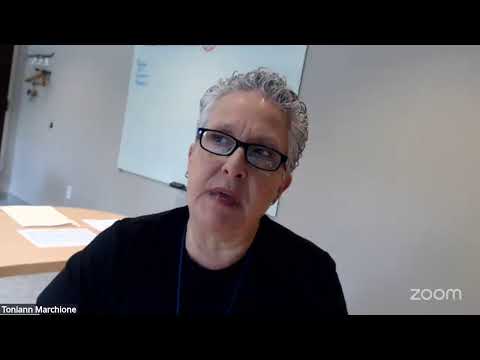
At the meeting, Toni Ann (organizer), Carrie Moss, and staff from the Department of Public Health explained the proposed governance: an advisory group that meets monthly to provide broad guidance and a smaller "action" or working group that would meet more frequently (potentially biweekly) to perform detailed, in-the-weeds tasks. "We're thinking more that on an advisory level, we would meet monthly. But those that we really need in the weeds ... we need to meet more often than monthly," Toni Ann said.
Speakers emphasized education and practical tools. Carolyn Torello, who identified herself as a parent of a medically fragile child, described gaps families face in locating services and caring during end-of-life moments and urged development of clear materials so clinicians and families "know what the next steps" are. Eileen O'Shea, a nursing professor at Fairfield University who has led a pediatric palliative coalition, said she has collected qualitative data from Connecticut parents illustrating gaps in services; she offered to share findings with the group.
Other topics discussed included workforce and training needs, cost and funding questions to support program expansion, and identification of different program models (state-run versus hospice-run) to evaluate for Connecticut. Brian Kenoyer, director of government relations at the Connecticut Hospital Association, and Tracy Wodach, president and CEO of the Connecticut Association for Health Care at Home, both said they would help examine practical, affordable arrangements for delivering pediatric palliative and hospice care statewide.
Logistics and near-term actions were set: the facilitators will circulate the approved bill text and the proposal the group submitted; the Solomon Group (Yale Law School) and other academic partners will circulate their white paper; staff will send an availability survey to schedule recurring meetings; and the Department will issue email invitations to those asked to join the action team. Melissa Widhoft, who described herself as a project manager and long-time hospice volunteer, volunteered to draft a project plan and timeline to map tasks against an intended legislative timeline.
No formal votes or motions were recorded in the transcript. Participants agreed to follow up by email and prepare materials the group requested for review at forthcoming meetings. The meeting concluded with thanks to members and a commitment from staff to distribute materials and a scheduling poll within days.
For now, the group’s immediate deliverables are: circulation of existing white papers and the approved bill text, formation of an action work group with a proposed meeting cadence, a project plan and timeline to support legislative deliverables, and a short inventory of program models from other states for review.
A recording and minutes will be distributed to members, and staff said emails and a scheduling survey would be sent by the end of the week.