Get Full Government Meeting Transcripts, Videos, & Alerts Forever!
Get email alerts on the School Mental Health topic
No spam. Unsubscribe anytime.
Wake County Public Schools outlines expanded school-based mental health partnerships and access efforts
Summary
Wake County Public Schools staff and community partners described multi-agency programs, expansion of teletherapy, crisis-reentry procedures and outreach strategies aimed at improving student mental health access across the county.
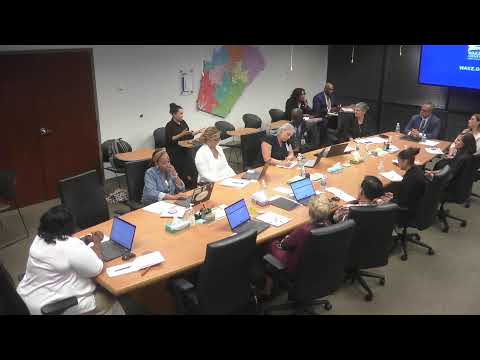
Wake County Public Schools staff and community partners on the district’s Community Engagement Committee detailed programs and partnerships on mental health services for students, including efforts to expand school-based therapists, teletherapy, crisis reentry supports and family engagement.
Board member Reitz, who opened the discussion noting mental health as a priority, said, “If we have mentally well and emotionally well students, we have success.” The presentation that followed summarized the district’s school mental health plan components, existing vendor partnerships and barriers such as consent paperwork and recent federal funding cuts.
The district’s staff described a mix of programs operating under a system-of-care approach. Michael Pesch, a Wake County Public Schools staff member, briefed the committee that the district will present its school mental health plan to the board in September and said the presentation focused on community stakeholders and the referral, treatment and reentry process. Pesch said, “Each September, we always present the school mental health plan that we've been working on as required by the state.”
Debbie Richardson, representing Alliance’s school-based team, detailed a long-running partnership with the district. She said Alliance’s program accepts referrals directly from schools for the highest-risk (tier 3) students, supports crisis monitoring and coordinates reentry from psychiatric facilities, and shares data under the district’s MOA. Richardson said, “Every decision, everything we have done has been in partnership with Wake County Schools. Every decision.” She told the committee Alliance had helped 5,811 children through multiple programs and reported near-90 percent parent releases for information-sharing in the program’s caseload (about 5,128 families), enabling continuity of care.
Richardson gave program counts and outcomes: an initial pilot in 2021 placed therapists in 28 schools; the district ended the most recent school year with therapists serving 106 schools and was starting the next year with about 125 schools, partly because of new teletherapy vendors. She said the program aims to have a therapist, in-person or virtual, available at every school by year-end. Richardson also noted a PRTF (psychiatric residential treatment facility) reentry target—getting students enrolled and back on track academically within 10 days—and said the program had achieved that goal for 98 percent of students who transitioned back to Wake County schools.
Daybreak Health, a teletherapy partner, described services and early metrics. Britney Wendy, Community Outreach Liaison for Daybreak, said the vendor serves students ages 5–19, offers two program models (elementary family teletherapy ages 5–12 and individual teletherapy ages 10+), and schedules sessions 8 a.m. to 8 p.m. Monday–Saturday. Wendy said Daybreak had 400 clinicians nationwide, that 74 percent identify as BIPOC and that in Wake County they currently offer Spanish and Mandarin clinicians. She reported district referral data for the 2024–25 school year: Daybreak received 290 referrals, 127 students participated in services, and “90 percent of students saw clinical improvement in their pre- and post-assessments.” Wendy also said Daybreak’s internal metric showed a median match speed of six days from consent to clinician assignment when consents are on file.
Wake County government’s behavioral health director Denise Freeman outlined the county’s convening role and funding context. Freeman said the county invests roughly $30 million a year in community behavioral health providers and that Medicaid policy changes and federal funding shifts affect how the county and the district allocate resources. She described a forthcoming county RFP for a comprehensive review of behavioral health services and gaps across Wake County, an effort expected to include community focus groups and to take roughly a year.
Committee members asked how families and school staff learn about services. Presenters said referrals generally flow through a school’s student support team (counselor, social worker, psychologist) and that the district and partners are expanding outreach: updating district and school web pages, sending newsletters, offering webinars in English and Spanish, and installing scannable materials (mirror/window clings) in schools to give students direct pathways to resources. Michelle Woodson, a Wake County Public Schools staff member, said the district is updating WakeConnect content and preparing new district and school websites to better surface family resources.
Members discussed consent and intake barriers. Presenters acknowledged that families must complete both district and provider consents today and called that duplication a barrier; staff said they are exploring streamlined approaches but noted legal and administrative constraints. Committee members and staff pointed to successful local practices—school staff completing paperwork on-site with families or dedicated staff who had previously focused on releases—that reduced drop-off and rapidly increased engagement.
Board members pressed for measurable progress toward district strategic goals on social-emotional learning and family engagement, and for expanded youth peer supports and teen-focused outreach. Staff said mental health training (mental health first aid, DBT) for adults who work with youth and pilot peer-support programs are in development or being explored. Presenters committed to returning with timelines, data and updates on implementation as the district and county continue their coordination.
The committee did not take formal votes on policy or funding at the meeting; presenters were invited to return with implementation timelines and additional staff (for example, the district’s program coordinators and care managers) for a follow-up Q&A.
Ending: Committee members thanked the presenters and agreed to continue tracking the district’s school mental health plan, vendor expansions and county review. The meeting adjourned with a plan to schedule future reporting on progress toward the district’s strategic goals and implementation milestones.