Get Full Government Meeting Transcripts, Videos, & Alerts Forever!
Get email alerts on the Gaza Humanitarian topic
No spam. Unsubscribe anytime.
UN warns aid flow to Gaza remains fragile as secretary-general urges renewed push for two-state solution
Summary
At a UN press briefing, the organization said recent easing of some movement restrictions allowed more aid into Gaza but described deliveries as insufficient and unpredictable, and relayed the secretary-general's call for a viable two-state solution based on pre-1967 lines.
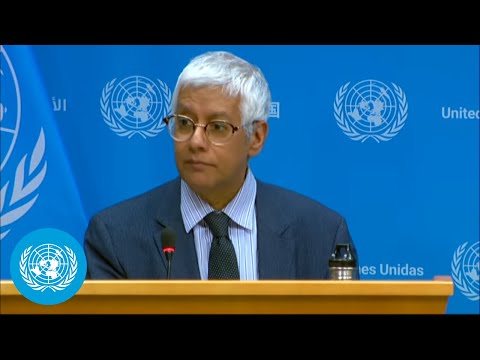
The United Nations said Wednesday that a small increase in access at Gaza crossings has allowed some additional humanitarian deliveries but that aid flows remain far short of what is needed, and that distribution continues to be unpredictable and dangerous for civilians.
At a briefing, the UN spokesperson summarized remarks the secretary-general will make at an international conference, saying the secretary-general will call for “a realistic, just, and sustainable solution for Israelis and Palestinians” and described a two-state outcome as the only viable path, referencing borders based on the pre-1967 lines and Jerusalem as capitals for both. The spokesperson warned that “time is running out” and that unilateral actions that would “forever undermine the two-state solution are unacceptable.”
The UN said some easing of movement restrictions this week allowed a modest uptick in deliveries. Tom Fletcher, the UN emergency relief coordinator, welcomed Israel's decision to allow a one-week scale-up of aid and reported early openings that enabled more than 100 truckloads to be collected for transfer. But the UN stressed that large, sustained convoys and predictable clearances are needed to prevent additional civilian suffering.
The briefing said the World Food Programme (WFP) reported sufficient food prepositioned in the region to feed Gaza's population for about three months if it can be delivered. UNRWA told the UN that roughly 6,000 trucks in Jordan and Egypt were awaiting clearance to enter Gaza. The World Health Organization reported that July was the worst month for malnutrition-linked deaths and that nearly one in five children under 5 in Gaza City is now acutely malnourished.
The spokesperson described repeated operational obstacles: multiple inspections and reloading at checkpoints, time-consuming clearance procedures that reduce the window for secure delivery, and episodes where desperate civilians offloaded food from convoys before cargo reached intended distribution sites. The UN characterized those episodes as the offloading of supplies by “desperate and hungry people,” noting that UN staff and partners view such incidents as evidence of an unpredictable, fragile aid environment rather than organized theft by armed groups.
The UN said airdrops have resumed but emphasized they are a last resort. Fletcher and other UN agencies told the briefing that road convoys, secure routes that avoid crowded areas, and multiple daily trips to border crossings are essential to get aid where it is needed safely. The spokesman said some movement restrictions have been simplified at crossings including Kerem Shalom and Zikim, but that the current daily truck numbers remain far below requirements: around 100 trucks on a good day, roughly a fifth of what the UN says is needed.
Asked about allegations that aid has been diverted to armed groups, the UN response stressed safeguards are in place and said independent reporting has found little evidence to substantiate broad diversion claims. The UN also noted that some food stocks remain outside Gaza in regional hubs, most likely in Egypt, Jordan or Cyprus, and that delivering prepositioned supplies into distribution sites inside Gaza remains the primary operational challenge.
The secretary-general's planned remarks at the conference, the UN said, are intended to press international actors to turn diplomatic momentum into durable progress toward ending the occupation and restoring a political horizon for a two-state solution.
Less critical details from the briefing included mention that Maximo Torero, chief economist of the Food and Agriculture Organization, will brief later by video conference on food insecurity, and a reminder that the UN considers a sustained, predictable flow of aid and safe routes essential to prevent famine.