Get Full Government Meeting Transcripts, Videos, & Alerts Forever!
Get email alerts on the County Budget topic
No spam. Unsubscribe anytime.
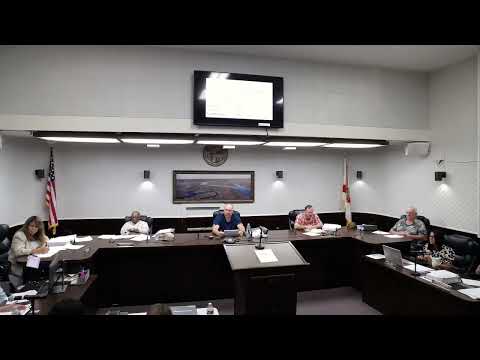
Taylor County commissioners debate cuts, weigh 1¢ sales tax and reserves to avoid sheriff staffing reductions
Summary
At a budget workshop, Taylor County commissioners discussed proposed cuts to balance the FY2025–26 budget, including a $200,000 reduction to the sheriff's requested increase, an $186,447 shortfall in the MSTU (municipal services taxing unit), and use of 1¢ sales tax revenue or reserves to avert service cuts.
Taylor County commissioners spent a workshop session debating how to balance the fiscal year 2025–26 budget, focusing on proposed reductions to constitutional officers and whether to use 1¢ local sales-tax revenue or county reserves to avoid cuts to public-safety services.
Commissioners reviewed a package of proposed reductions shared by finance staff and discussed options including a $200,000 cut to the sheriff’s requested increase, reallocating work-squad funding, and a possible increase to building and planning permit fees to reduce pressure on the county’s municipal services taxing unit (MSTU). Danielle, the county finance director, said the county’s estimated general-fund reserves for 2026 are $12,024,000. “The balance that I’m estimating for 2026 is $12,024,000,” Danielle said.
The discussion centered on three funding levers: accept departmental reductions, draw from the county’s 1¢ local option sales tax (often called “1¢ funding” in the meeting), or use general-fund reserves. Commissioners and some members of the public warned that cutting sheriff staffing would alarm residents and could affect public safety in remote communities such as Steinhatchee and Keaton Beach.
Commissioners and staff outlined key figures discussed during the workshop: a projected MSTU shortfall of about $186,447 under the current proposals, a suggested $42,000 in additional revenue if building-permit fees are raised roughly 20–21% (which staff said could make the building and planning departments self-sufficient), and a proposed rollover of roughly $316,654 into reserve funds under the current package of cuts and adjustments.
Several commissioners argued for using a small portion of the 1¢ sales-tax revenue to cover a remaining gap of roughly $81,000 in the general fund so that services would not be reduced. One commissioner said funding that smaller shortfall from 1¢ revenue would avoid raising the millage rate and would not “rob” savings. Another commissioner opposed reducing the 1¢ allocation on principle, noting that the sales-tax fund historically pays for vehicles, hospital equipment and capital needs and that drawing from it reduces the pool available for future capital projects.
Public commenters and residents pressed the board to protect emergency services. Sheldon Jefferson, an area resident and commander of the American Legion District 3, told commissioners he supported the sheriff’s office and said public-safety services are critical to attracting and retaining businesses and residents. “I support our sheriff’s department 100%,” Jefferson said.
Budget questions raised by commissioners and residents included whether some sheriff’s office positions or services are grant-funded and how certain contractual payments are handled. In response, county officials said the department’s chaplain services are volunteer but that a counselor’s salary is paid through a separate mental-health grant. Officials also confirmed that some emergency-management staff are paid by a grant that ends at the end of the month. Commissioners further queried an IT services arrangement tied to the sheriff’s office, and the sheriff’s office representative explained the county pays the vendor/company rather than an individual employee.
Solid-waste and roll-off sites were discussed as another possible source of savings. Staff estimated that closing roll-off sites one day per week might reduce personal-services costs by more than $50,000 a year, though tipping fees and other fund-level costs would remain unchanged. Commissioners said a focused workshop on solid-waste operations would be a better place to drill into those changes and that such operational changes would not materially affect the general fund.
Officials also reviewed dedicated funds tied to boat ramps and sinking funds. Finance staff said there is about $361,000 designated in a sinking fund for boat-ramp projects; commissioners discussed reallocating some code-enforcement salary costs to boat-ramp activities where appropriate given staff duties.
No formal votes or ordinance changes were adopted during the workshop. Commissioners asked staff to recalculate figures, prepare details on proposed permit-fee changes and their revenue impacts, and return with updated budget sheets before the board’s tentative millage-rate setting meeting and the final budget adoption deadline in September. Finance staff reminded the board that the tentative millage rate setting (a separate meeting) limits the ability to raise the millage later.
Commissioners emphasized different priorities: some said the board should preserve services by using 1¢ revenue or a small portion of reserves; others argued departments should share further reductions and that the current plan—with the proposed reductions and the estimated rollover into reserves—was reasonable given outstanding insurance and EMS costs expected later in the year.
The board scheduled further work product from staff and signaled that a more detailed ordinance or administrative changes could be considered if the board decides to reallocate 1¢ sales-tax funds. The county’s next steps include staff recalculations ahead of the tentative millage meeting and follow-up workshops on targeted operations such as solid waste before finalizing the FY2025–26 budget in September.