
Wilson County Teen Court director briefs Lebanon board on teen-jury diversion program
Get AI-powered insights, summaries, and transcripts
Sign Up Free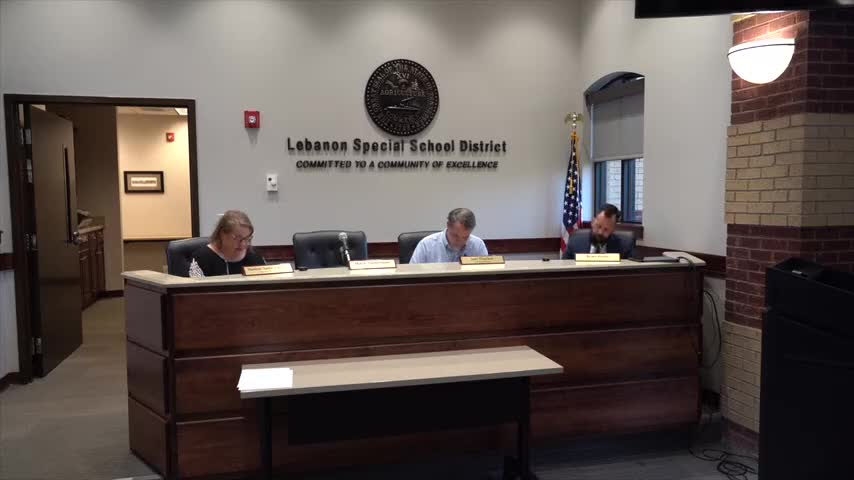
Summary
Gary Vandiver, director of Wilson County Teen Court, described the program's adult-judge/teen-jury model, monthly operations, types of sanctions and recent participation levels, and cited Tennessee Code Annotated as the program authority.
Gary Vandiver, director of Wilson County Teen Court, briefed the Lebanon Special School District board on the county'run teen court program, explaining how the adult'judge/teen'jury diversion process operates, what sanctions the teen juries can impose and how the program interacts with juvenile court referrals.
Vandiver said the Wilson County Teen Court is a 501(c)(3) chartered in February 2003 that operates through the juvenile court and receives referrals from youth service officers. He cited Tennessee Code Annotated 37-1-1102 (as stated in the presentation) as the statute authorizing the program to hear certain felony, misdemeanor and unruly cases and described an adult judge model in which teens serve as clerk, bailiff and jury foreman; a teen jury hears a presented case, deliberates and recommends sanctions.
Sanctions described by Vandiver include a $30 court cost, community service hours (up to 10 hours noted), in'person and online educational classes (drug/alcohol or similar programs), pick'up tasks such as collecting litter, curfews and other noncustodial interventions. Vandiver emphasized the program cannot incarcerate a child but can require tasks, classes or community service and that successful completion of sanctions can allow a defendant's record to be expunged under program rules.
Vandiver said the program aims to involve regular students from sixth grade through senior year as jurors; he reported panels of about 30 jurors most nights, and recent nights with 46 jurors and a docket of 12 cases. Teen Court provides community service hours, scholarship recognition for graduating seniors and certificates of participation from the Tennessee Secretary of State's office. Vandiver said the program receives modest county grant support, case cost funds that are reinvested into the program, and occasional donations; he also declined to make an explicit solicitation but said the program would accept funding if offered.
Board members asked procedural questions (frequency of court nights, case volumes, typical sanctions), and Vandiver said Teen Court typically meets one night a month (generally the second Monday) and that next month's docket included 11 cases, which otherwise would have gone to juvenile court. He also invited board members and students to observe court nights when appropriate.
The Teen Court presentation was informational; the board took no formal action on the program at the meeting.